

“Make the art, then secure the bag”
In this edition of the Weekender: New York Times bestsellers lurking in unexpected places, a remedy for atrophied attention spans, and how to spend money in your twilight years

This week, we’re re-familiarizing ourselves with DJ Khaled, committing to curiosity, and splurging within reason.

RETROSPECTIVE
Another one
Mary H.K. Choi, whose new novel is out this week, reflects on the makings of her first bestselling book: DJ Khaled’s biography.
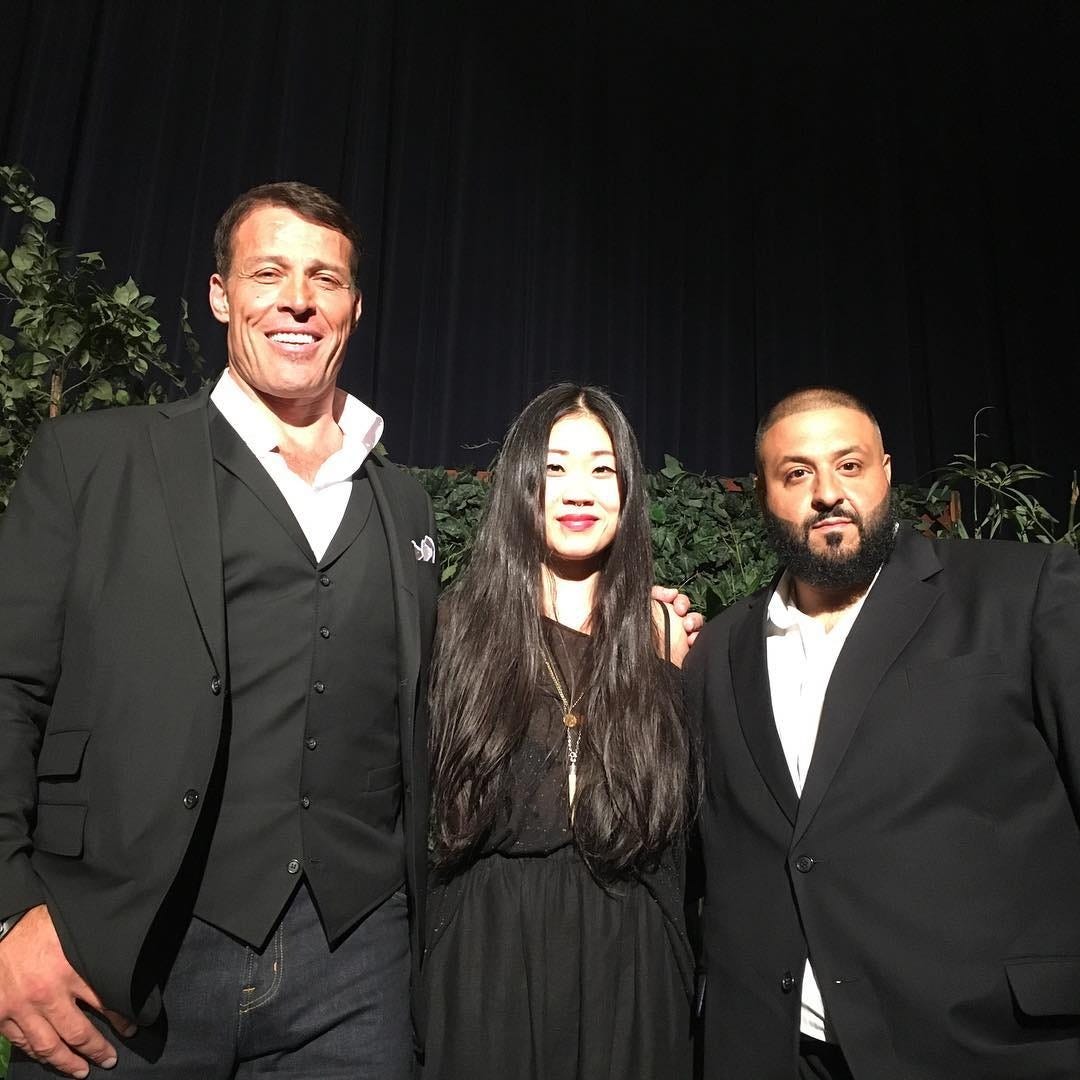
Keys Open Doors
—Mary H.K. Choi in choitotheworld
Technically, it was my first New York Times bestseller, but more crucially it was the first time I was tasked to write a book without any idea of how to go about it. I had written several celebrity profiles by then. I had been on tour with Rihanna for seven days with a caravan of other journalists, but nothing had quite prepared me for sliding into the fiefdom of a rap personality as they were blowing up.
If you’ll remember, this was when DJ Khaled, whose name is Khaled Khaled, had gone stupendously viral on Snapchat for getting lost at sea on jet skis at night. It was a harrowing yet heartwarming ordeal and all the while, lit only by the glow of his phone, he narrated the events through a series of reassuring platitudes. The key is not to panic. The key is to make it. The ocean is real. The key is never give up. It’s not easy to win.
He’d already had wins. Most notably, the colossus All I Do Is Win, as well as eight studio albums, but this is the moment where America noticed him. The morning shows wanted him. Ellen. Martha Stewart. He’d become a household name and knew it, and everything he said caught fire. He churned out content like an influencer in a clout house, shining his light on his workouts, his brief stint with veganism, his chef, the stone lion in his yard, his partner, his lotion, his cronies, his cars and, occasionally, his biographer.
As Khaled’s star was rising, the book deals inevitably arrived and my name quickly made the short list. Years later I’d find out how much Khaled made on the deal, and while that figure is not my business to share, what I can say is that I was offered about $25ishK and had six weeks to turn it in. It felt doable. I could sense the momentum and had always been a fast writer. They put me up in the St. Regis for three nights and I knew that if I could get even two hours with him every day, I would have enough for a business book of aphorisms that would not only chronicle his origin story but give color to his life.
The long and short is that it was classic rap shit and he ignored me for all three days as I skulked around his house. I eventually elbowed my way onto his tour bus so I could get time with him on his way to Atlanta. At this stage of his life DJ Khaled was afraid of flying and this ended up being a gift. I interviewed his partner Nicole, his right hand Kiko, his photographer and videographer Ivan, as well as many of his friends. I still have Fat Joe’s number in my phone from that time and both Cool and Dre’s. I also have Big Boi from Outkast’s number in my phone, but that was from something else.
The longer, longer story is that I observed DJ Khaled for about 8 or 9 days total, this trip and later when he came to New York. I blended into the decor, threading my way through the crowds that clamored towards him like fast zombies for “fan luv,” I overheard his conversations, he was constantly calling people, and learned who this man was beyond the phrases.
Mostly I watched DJ Khaled, obstinately sitting in his sight line like a begrudging, plotting cat with my notebook and recorder. On day five of him not speaking to me, I decided I’d invoice him directly for more money since he was eating into my deadline. I’d seen how dedicated he was in securing the bag and wanted his attention. “I’m raising my rate,” I said. “I’m going to invoice Patty” (his childhood friend who also ran operations at the time).
He told me, and I’ll never forget this, that he had a special, tailor-made key for me:
“Are you an artist?” He asked me. I was startled by this sudden pop quiz and hesitated. “Of course you’re an artist,” he said. “I wouldn’t have hired you if you weren’t an artist. But if you’re an artist, don’t talk about money before you make the art,” he advised. “Make the art, then secure the bag.”

SUMMER SILVER

RELIGION
“A hallmark of mania”
A candid, personal exploration into the zone where spirituality and mental health intersect.

Religious Madness
—Shifting Tides in Shifting Tides
My spiritual director once asked me to do my best to differentiate between experiences that felt real and experiences that were actually true. It was wise counsel, though almost impossible to apply in the moment. During the experience itself, there is no clean distance from which to evaluate it. There is simply the reality of the experience: the opening of the senses, the cosmic feeling, the sense that all humanity is interrelated, the feeling that you have finally seen what has always been there. It is difficult to describe, partly because experiences like this are almost by definition ineffable. It doesn’t emerge as a logical argument to be handed across the table, which is why throughout the ages most have often reached for poetry.
Mania does not always feel like madness from the inside. Sometimes it feels like transcendence. I have had experiences like this before, and looking back, I can say that at least one of them does not seem authentic to me anymore, while another one still does. I realize how strange that may sound. How do I get to decide that? What does authentic even mean in this context? What does it mean for something to be real?
I do not have a clean answer, and I am increasingly suspicious of anyone who does. Each person has to wrestle with that question from within his or her own tradition, experience, community, and conscience. For me, I answer from within Christianity. Did God reveal something real and true to me? Was it from God? Did it draw me toward love? Did it humble me? Did it endure? Did it form something good in me after the intensity faded?
The last question has become especially important, because time has become one of the only tools I trust. I cannot always discern an experience while I am inside of it, but I can sometimes see what it produces after the fact. I can see whether it still rings true months later, whether it leaves an imprint on my soul that helps me live better, whether it makes me more compassionate, patient, honest, and connected to God and other people.
The first experience I think of had all the marks of religious intensity. There was an opening of the senses, a cosmic connection, euphoria, grandeur, and a special mission from God. Everything seemed to speak to me, and at the time it was Disney movies. I was convinced there were messages everywhere. I abandoned an incredible opportunity for my family because I believed I was supposed to start what I thought could become the next Charles Xavier school for the gifted. Even writing that sentence is painful because it sounds absurd from a distance, but at the time it was charged with meaning. It felt coherent. It felt beautiful. It felt like God was doing something extraordinary and I had finally understood my role in it.
I do not look back on that season only with embarrassment. That would be too easy, and it would not be entirely honest. It was one of the most euphoric seasons of my entire life. There is one night I still think about often. I was sitting in the back of my truck under the stars at 3 a.m., overwhelmed by my closeness with God and what I thought he was doing. My face almost hurt from smiling. I felt held by the universe. I felt chosen. I felt alive in a way that depression makes almost impossible to imagine. When everything is gray and heavy, when my body feels like concrete and God feels distant or silent, I remember that night and ache for it. I want the stars and the smile and the nearness back.

MATTERS OF THE HEART

READING
Wherefore art thou, attention span?
Modern life is essentially slinging the thought “Am I reading enough?” on an unending hamster wheel in perpetuity. John Paul Brammer offers a prognosis, and potential cure, for literary rumination.
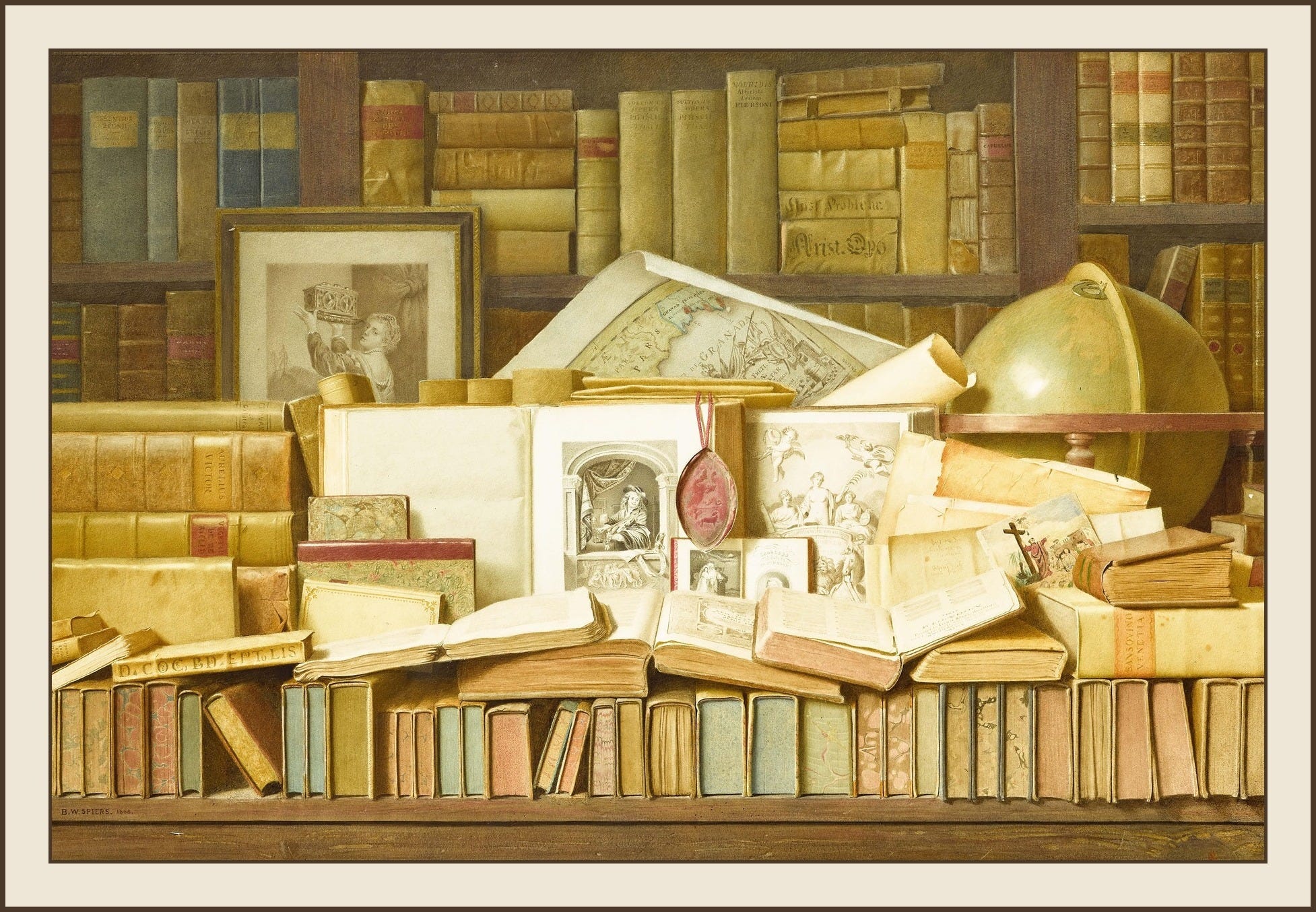
How I Learned to Read Way, Way More
— John Paul Brammer in John Paul Brammer
You’ve probably heard this, or said it yourself: “I’d love to read more, but I can’t.” I can’t focus. I can’t sit still. My mind wanders. “I can’t crack it.” People who want to read more are aware of the tender goodness inside literature, but the barrier is too stubborn. They’ve become too weak to pierce the skin. Or so they think.
If you’re hoping for an easy trick to bypass this obstacle entirely, I’m sorry to disappoint. There is, or at least there was for me, a mandatory effort on this front. But as with breaking into anything, it’s useful to find the weak points. It was while probing that I found my way in. The sweet spot wasn’t attention, really, but something closely related to it.
Curiosity is a child. It’s greedy and unpredictable and has two modes. It’s either in frantic activity, or it’s dead asleep. When it wants something, when it truly wants something, it’s nearly impossible to keep its hands away. A child curious about the taste of dirt will find their way to dirt. The whole of the child’s spirit will narrow toward dirt. The child will slip through any gap in the pen. The strictest parents know there’s always a gap. “No” means nothing.
When I consider the attention crisis as a curiosity crisis, some things become clearer. For argument’s sake, embrace some hypothetical good news: our faculty of attention isn’t shrinking after all. We’re as capable of sustained attention as any of our forerunners, including the French ones in voluminous powdered wigs who attended the grand salons and kept vast personal libraries. The problem, in that case, would be misapplication.
It’s no coincidence the internet is holding our attention with ever more colorful, infantilizing distractions. Take those AI-generated videos of anthropomorphic fruit. Sugary. Bright. The strawberry cheats on the banana with the pineapple. And then what? The strawberry gets pregnant and gives birth to a pineapple. The banana is present. And then what? The only thing that distinguishes this from entertainment for babies is its lewdness and lack of a perfunctory moral lesson. If prayer makes the Catholic more like a saint, then pure attention, spent like this, makes us more like crass, immoral babies. Attention here is only the price. The thing that’s spent. The child stole the credit card.
You’ve experienced curiosity at full bore. You’ve lost hours to true crime on YouTube, surfaced from a show at three in the morning, tracked a fight between strangers on the internet down to the last granular detail. There’s something juvenile about this, isn’t there? Helplessness in the face of an urge. It’s like eating ice cream with your hands. Eat. Eat. Eat. This is pure attention, and we spend a great deal of time in it. It’s dissociative and pleasurable. It can be abused.
The parent’s power is discipline and discernment. Nothing, I’m sorry to say, will make vegetables taste like ice cream. But you can live in such a way that the tongue’s relationship to sugar changes. People trying to get back into reading sometimes reach for the densest, most impressive novel, then bow out believing they’re too stupid to access it. Intelligence isn’t the culprit, but palate.
Where to start? By living the life you live, you already have books and authors in your periphery, names that recur. Answer them.

SOMETHING TO CONSIDER

CHA-CHING
Word to the wise
A retiree dishes on the money management tactics, and regrets, that have carried her through life.
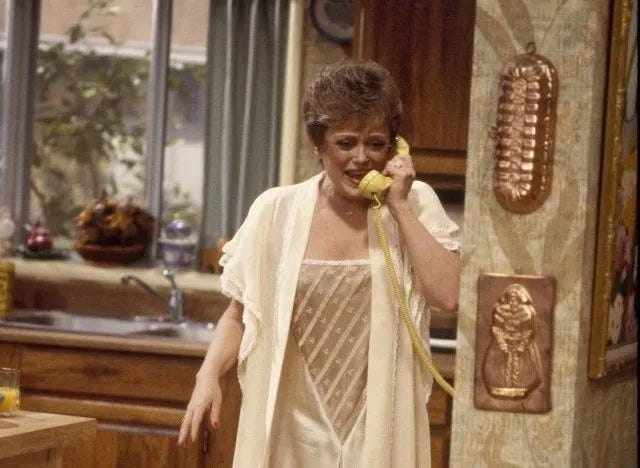
Phone a Friend: 81 Years Old and Not Being an Idiot
— Alexandra Nassif in Phone a Friend
What you’re saving for right now:
In the last couple of years, I’ve made a big switch in my attitude towards spending. You don’t have to be a great mathematician to know I don’t have a long path ahead of me. When I first retired, I would look at the money in my bank and divide it by the number of years I expected to live and ask, “Will it last?”
My mantra now: “Don’t be an idiot, do it while you can.” I want to create memories with my family and friends while I’m healthy — traveling, hiking, going to restaurants.
What you like to splurge on:
My biggest splurge is that I’ve remained in my extremely large, expensive apartment alone.
What you skimp on happily:
At this point in my life, I’m not going to do a major renovations to my apartment. My kitchen cabinet doors don’t all close. I don’t have central AC. I’ve thought about redoing these things but then I ask myself: “Is that really going to make me happier?” Screw it. When I sell, they’ll do it.
Money advice you’d give other women:
I can’t emphasize this enough: Married women and couples living together must know what’s going on with their money. You should know what’s exactly in all of your accounts.
I’ve been shocked by a couple of cases of divorce or widowhood where women have been really screwed by their partner. I know of a young couple who is divorcing right now and to her surprise he owes $600,000.
Retiring in New York City:
I have been incredibly fortunate to have saved enough to have a good retirement. Being retired in New York is wonderful. You go outside and even if you don’t meet someone, you are reminded that there is life out there.

AIR MAIL

REALITY BITES
All fingers point West
Hunter Harris posits an investigation into the inescapable Summer House drama swirling online.
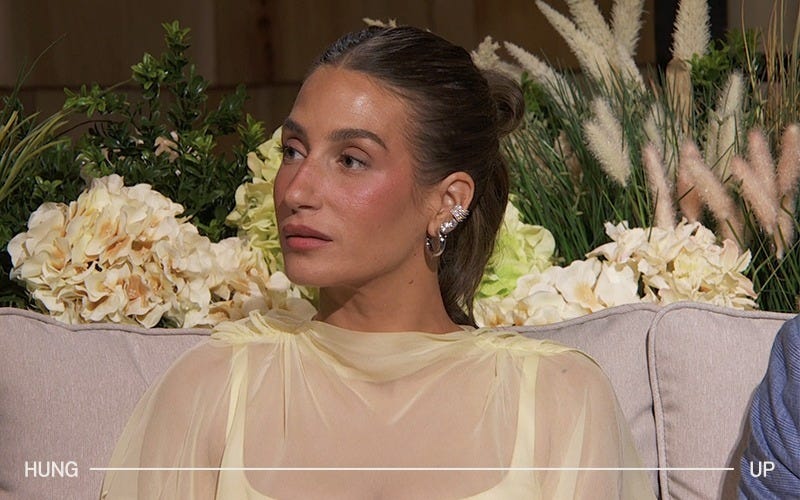
32 Questions for Amanda Batula
—Hunter Harris in Hung Up
Now that her charade of accountability at the Summer House reunion is over, we can get into the nitty-gritty. There are still dozens of questions for Amanda Batula, questions that she completely ignored or did not answer, and a few follow-ups she wasn’t asked. West agrees that he’s an incorrigible womanizer when pressed, but Amanda enjoys a victim narrative at the reunion, perhaps for the benefit of Kyle, who still loves her. (Of course he wants to think of her as manipulated and isolated! That’s the wife we’re watching him try to reconcile with this season on In the City!)
The most satisfying moment of the reunion, for me, was a question from Mia: “Amanda and West, did you honestly just come forward because there was so much speculation? Or were you guys going to continue to lie to us?” Now that’s a question I want answered. In the best-case scenario, what was the plan here? When were they going to share this with their friends, let alone the rest of the world? Amanda wakes from her slumber to give one answer that sounds real: “To be so honest, in that moment [we] came forward because of the speculation, because there were a lot of things I was still trying to understand and figure out, including the Meija situation,” she says. Mia again: “So it had nothing to do with, like, hurting your friendship with Ciara? It had to do with figuring out if West was actually exclusive with Meija?”
My group chat is still buzzing with questions left outstanding after the reunion’s final part aired. (A great comment from Meg Zukin, after Amanda said that she’s only been in a bubble thinking about herself: “We know!”) I treated this like an assignment: what would I have asked Amanda?
If you weren’t thinking about the potential (and likely) fallout from this relationship—in your friendship with Ciara, in your breakup with Kyle, in the larger friend group—what were you thinking about?
What did you think when you saw West leaving thirst comments under Ciara’s IG posts weeks before you announced your relationship?
When you say “sorry” to Ciara, are you apologizing for lying to her, or for having feelings for her ex?
Even though I don’t buy this part of the story at all: what did you do the day after West told you he had feelings for you?
Did you expect the cast to press West on his relationship with Meija?
West agreed with Andy that it seems dangerous to be in a relationship with someone with very clear commitment issues. What makes you certain that, despite embarrassing Ciara, Meija, and himself, he won’t embarrass you?
Did West detail his private conversations with Kyle about your marriage to you?

SPORTS

Substackers featured in this edition
Art & Photography: Erika Lee Sears, Abigail Sandler, Tessa Perlow, Meecham Whitson Meriweather, Val Webb
Writing: Mary H.K. Choi, Shifting Tides, John Paul Brammer, Zach Zimmerman, Alexandra Nassif

Recently launched

Zeteo UK, an engine for “independent and unfiltered journalism written by some of the UK’s leading reporters” has launched on Substack.
Alex Cooper has launched an offshoot of the Unwell universe on Substack. UNSAID will be publishing two volumes of essays, deep dives, and pop culture commentary every month. The first issue included contributions from writers like Viv Chen, Dia Lupo, and Isabel Timerman.
DC is now on Substack, where it’s rolling out pieces from the perspectives of the characters in the upcoming Supergirl movie.
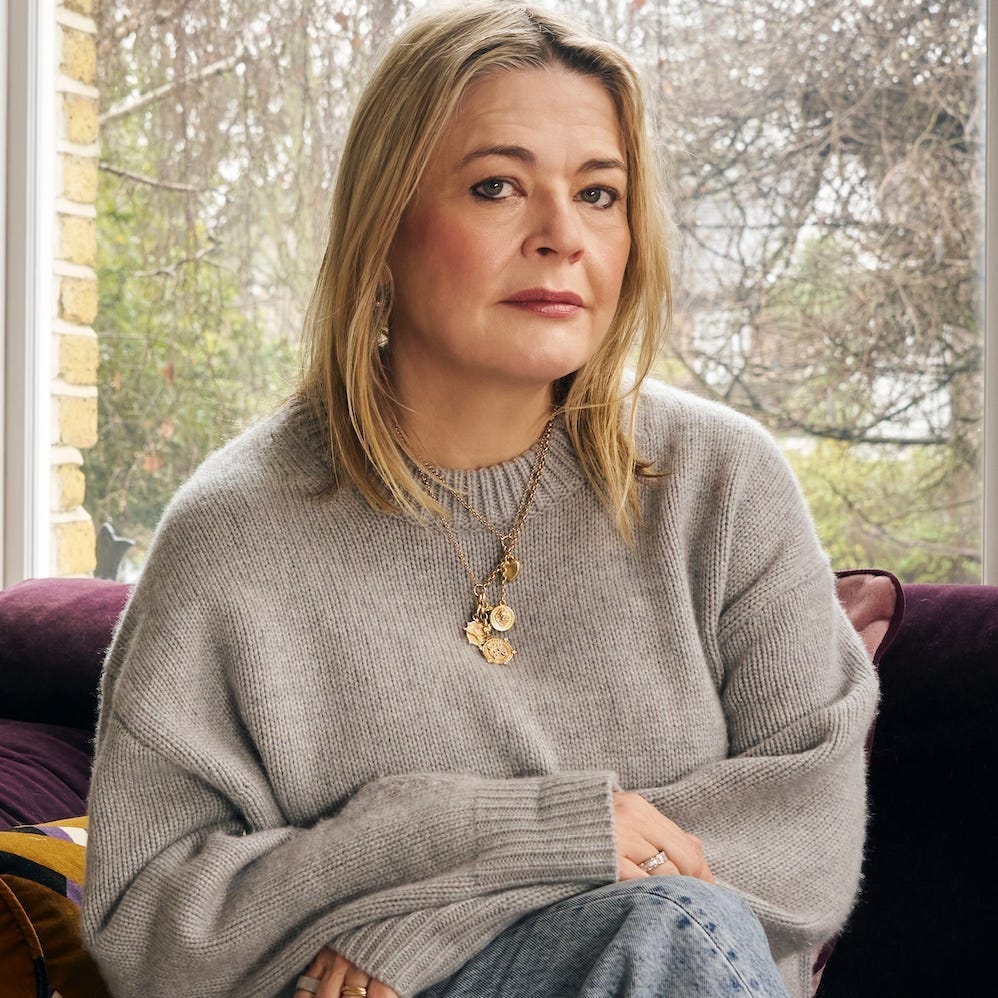
Bestselling crime author and former Traitors contestant Harriet Tyce is now writing on Substack in Cat among the Pigeons.

Inspired by the writers and creators featured in the Weekender? Starting your own Substack is just a few clicks away:

The Weekender is a weekly roundup of writing, ideas, art, audio, and video from the world of Substack. Posts are recommended by staff and readers, and curated and edited by Danya Issawi out of Substack’s office in New York City.
thank you for featuring phone a friend, @Danya Issawi! this anonymous money interview — and the woman behind it — is one of my favorites yet. glad more people will get to see it. here's to more women talking about (and getting) money!!
Wait a minute... I thought it was leave the gun take the cannoli? ❤️ 😍