

“At some point in the future, something that is currently considered a high-level skill will be the baseline for everyone”
In this edition of the Weekender: an Australian journalist in the hot seat, a book written by hand, and a flattened World Wide Web

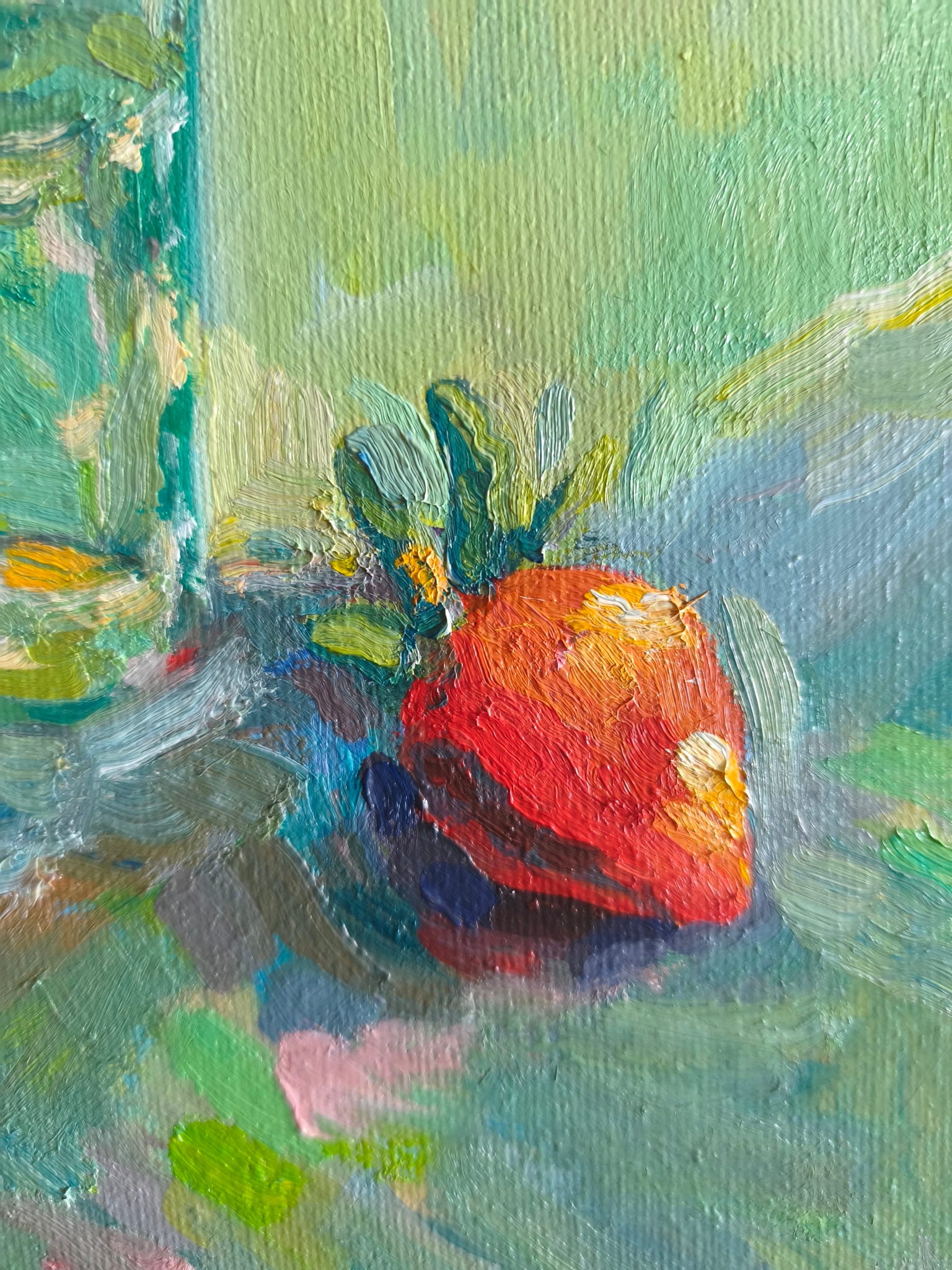
This week, we’re eating our seaweed, throwing tech to the wind, and sculpting rocks in our own image.
CONFORMITY
A homogeneous internet for all
Feeds seem to be increasingly rewarding content that looks the same. What does that mean for the creators pushing these posts out?
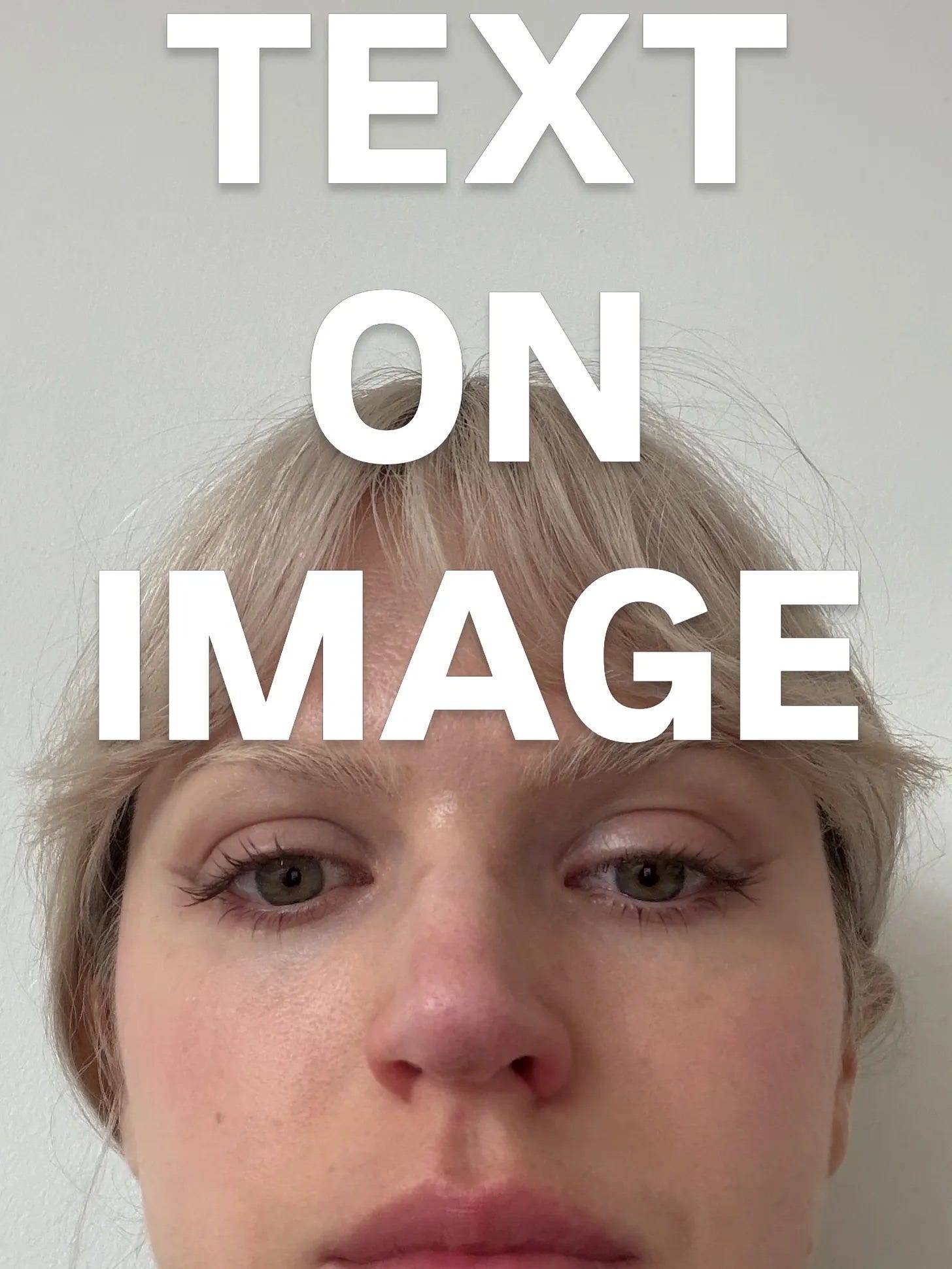
oh my god. we’re in template slop?
—brenda in brendstack
at some point in the future, something that is currently considered a high-level skill will be the baseline for everyone. this applies to almost any industry but also any hobby. physical skills as well as digital. I talked about this with legendary graphic designer mirko borsche in an interview recently. there was a time not so long ago we used to rely on the one gifted person in the office who could build an impressive deck within a few days, now it’s one command into chatgpt and it’s done. my girlfriends are doing elaborate nail designs at home, what we considered good cuisine ten years ago is now average. I can go on with the examples. I get into it many times on my podcast, but as a creative, you constantly need to re-invent yourself in order to be ahead of the curve or an expert in anything. that means practice, read, practise, research, learn, practise, refine, expand, curate, refine, practise. you get what I am saying.
I have been noticing something on instagram for a few months that I couldn’t quite yet articulate. butter yellow font, kinda chic to, photo ideas for cool girls, where to get inspired outside of pinterest, kinda chic to, wtf is minimalism, topics to write essay on instead of scrolling, kinda chic to, ten habits cool girls do, every day once a week once a month, kinda chic to. if nothing [else], here is something you’ve seen in pastel font on your explore page:
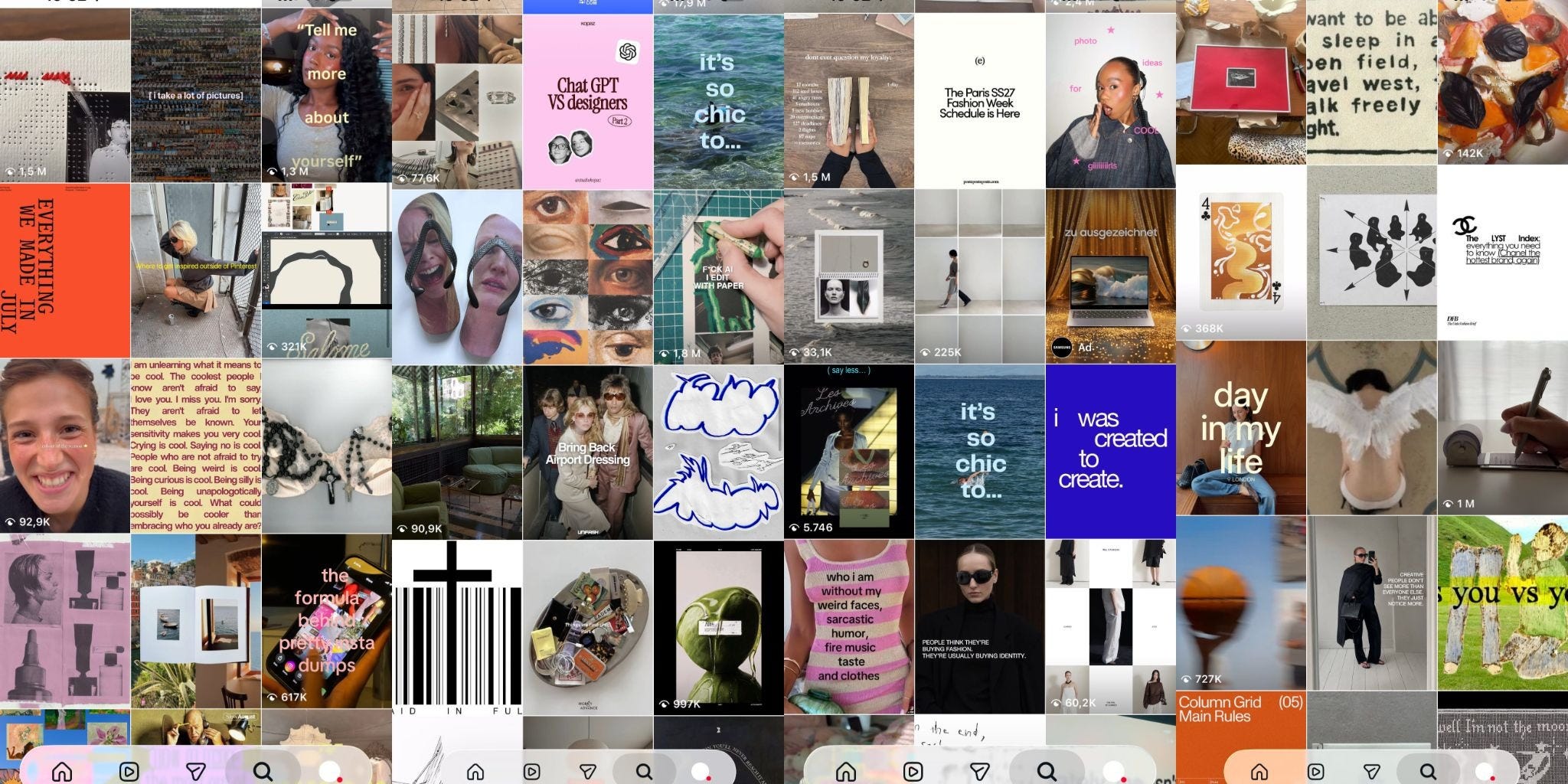
“dress well and stay weird,” “idk and idc,” “essays to read when you feel like giving up.” it’s like I blinked, and everyone is a gifted graphic designer, a storyteller, knows the 10 things to know about anything! so what exactly is going on? a lot of things are happening at once. first, even the last person on social media has realised that the apps are rewarding text on images, preferably a carousel, preferably the audience can “learn” something (aka be hand[ed] knowledge without having to do research, rian phin, come explain why that is bad, please!). this is not something I am not guilty of doing, even on this substack. I am aware the most popular things I have written are the how to’s. everything has a hook, everything is designed. but if you scroll for more than a minute, you realise that, especially the videos, nobody edited them. nobody thought of a format. the format is a template from capcut and the instagram edits app. so a video that would’ve taken a professional four years ago one hour to edit is now a template. everybody is a designer. everyone has taste. nothing is impressive or sticks. nothing is original. a few years ago it would’ve been groundbreaking. I am not immune to a tiktok or reel trend, or carousel, so this is not me pointing fingers. I think zeitgeist is incredibly helpful, keeping your finger on the pulse, joining in on a conversation. but if you do not have the willingness to take the trending topic, trending template, just one percent further, where does it lead you? an aesthetic grid, for sure, but not long-lasting effect. yesterday, I tried to do a template my own way, sadly the engagement proved me right lol.
DATA CENTERS
FOOD CULTURE
Refusing to stomach it
Emiko Davies, an Australian-Japanese cookbook author and food writer, pushes back against one journalist’s sweeping opinions on Japanese cuisine.
“Japanese curry is the worst curry in the world”
—Emiko Davies in Notes from Emiko’s Kitchen
“I’m not sure that seaweed, for example, is food.”
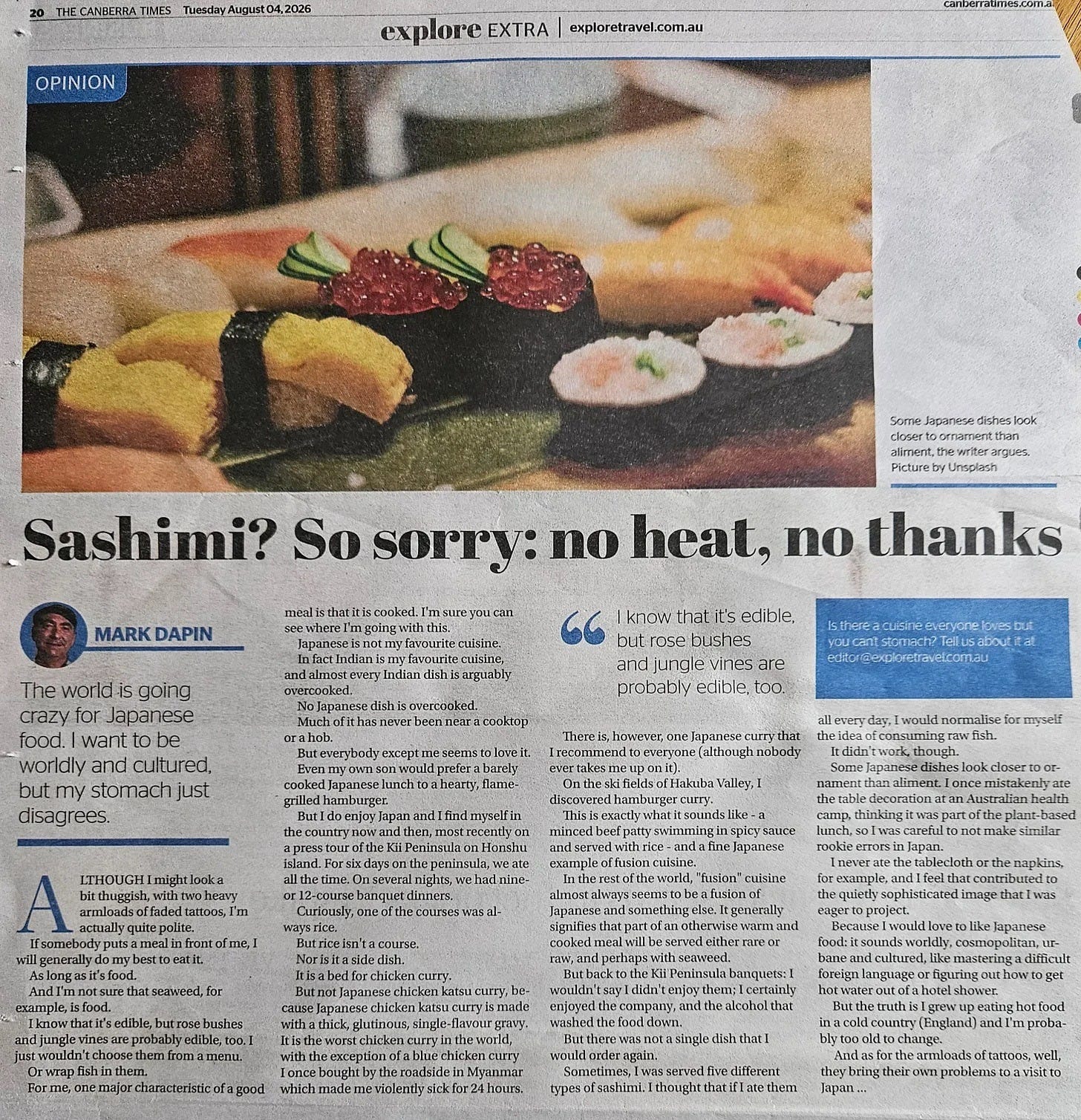
I’m only a few sentences into a newspaper article that my father has cut out and left on my desk and I can feel the hairs on the back of my neck bristle. It’s titled Sashimi? So sorry: no heat, no thanks and no, it wasn’t written in 1956, it was published in The Canberra Times—the newspaper of the Australian capital—on August 4, 2026.
It gets worse, line after line. I try to ignore it. In fact, the article sat on my desk for a few days before I could even bring myself to read it.
[. . .]
This isn’t about what people like or don’t like to eat. I honestly don’t care what other people want to eat. But the author, Mark Dapin, is a seasoned British-Australian journalist and author. I would expect journalists to, I don’t know, research a bit, or be curious before writing something that makes them look like an ignorant bigot. How embarrassing to be so blind to think that one dish defines an entire cuisine. Even travelling there wasn’t enough to open his eyes.
Where to even start, Mark? Seaweed has long been an important, native food source even in your homeland, England, which is part of an archipelago—like Japan. There are some 600 different varieties of edible seaweeds found today in British waters; it’s an incredibly nutritious, economical food that sustained the British people for at least 8,000 years—in fact, it was an ancient, staple food across the continent and only dropped off most menus in the 1800s. It’s not just the ancient British and Asians who prized seaweed as food, but in South America there are 14,000-year-old seaweed middens that lay inland, meaning the seaweed was important enough to be carried all the way from the sea, and in Australia, First Nations people have used seaweed not only as food, but for medicine, ceremonial uses, even practical items like water carriers, for 65,000 years. [. . .]
In fact, the European Commission believes seaweed could be the sustainable answer to feeding the world’s growing population and that by the 2040s, it could produce 100 million tonnes of extra food. You might need to get used to the idea that seaweed is food. [. . .]
“Japanese chicken katsu curry is made with a thick, glutinous, single-flavour gravy. It is the worst chicken curry in the world.”
It’s completely fine to not like something. Really. I don’t even make my kids eat something they don’t like (life is too short). But it is not fine to make sweeping statements about an entire country’s cuisine.
I think you’ll like this story, though. Japanese curry was adopted into Japanese culture through the British Royal Navy. In the second half of the 1800s, after 265 years of isolation from foreign influence, Japan gave in and opened their doors. The Emperor also decided to introduce eating meat for the first time in 1,200 years, which meant that they also needed to look to western cuisine for ideas on how to cook meat. There was another problem. The Japanese navy was plagued with the vitamin B1 deficiency beriberi, and once the Japanese saw that the British navy didn’t suffer from it, they realised that the curry was key and adopted it with verve. The first recipe for curry in a Japanese cookbook dates to 1872.
PUTTIN’ ON THE RITZ
EN PLEIN AIR
Painting as a mnemonic device
Max Annable swaps a camera for brushstrokes to document his trip.
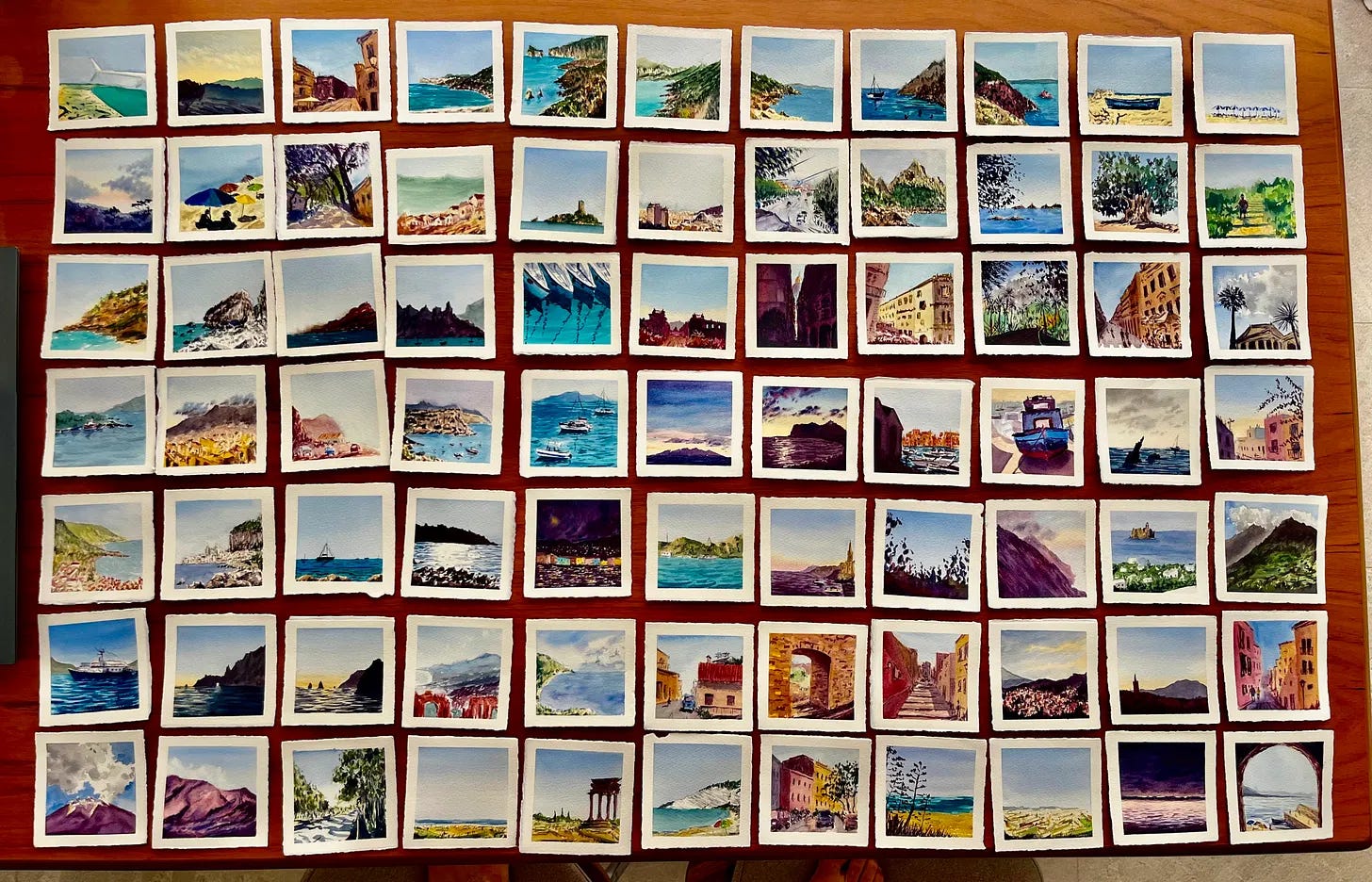
Watercolor trip through Sardinia & Sicily Part 1
Just got back from three weeks island-hopping around Sardinia and Sicily. I painted the whole way.
Sardinia:
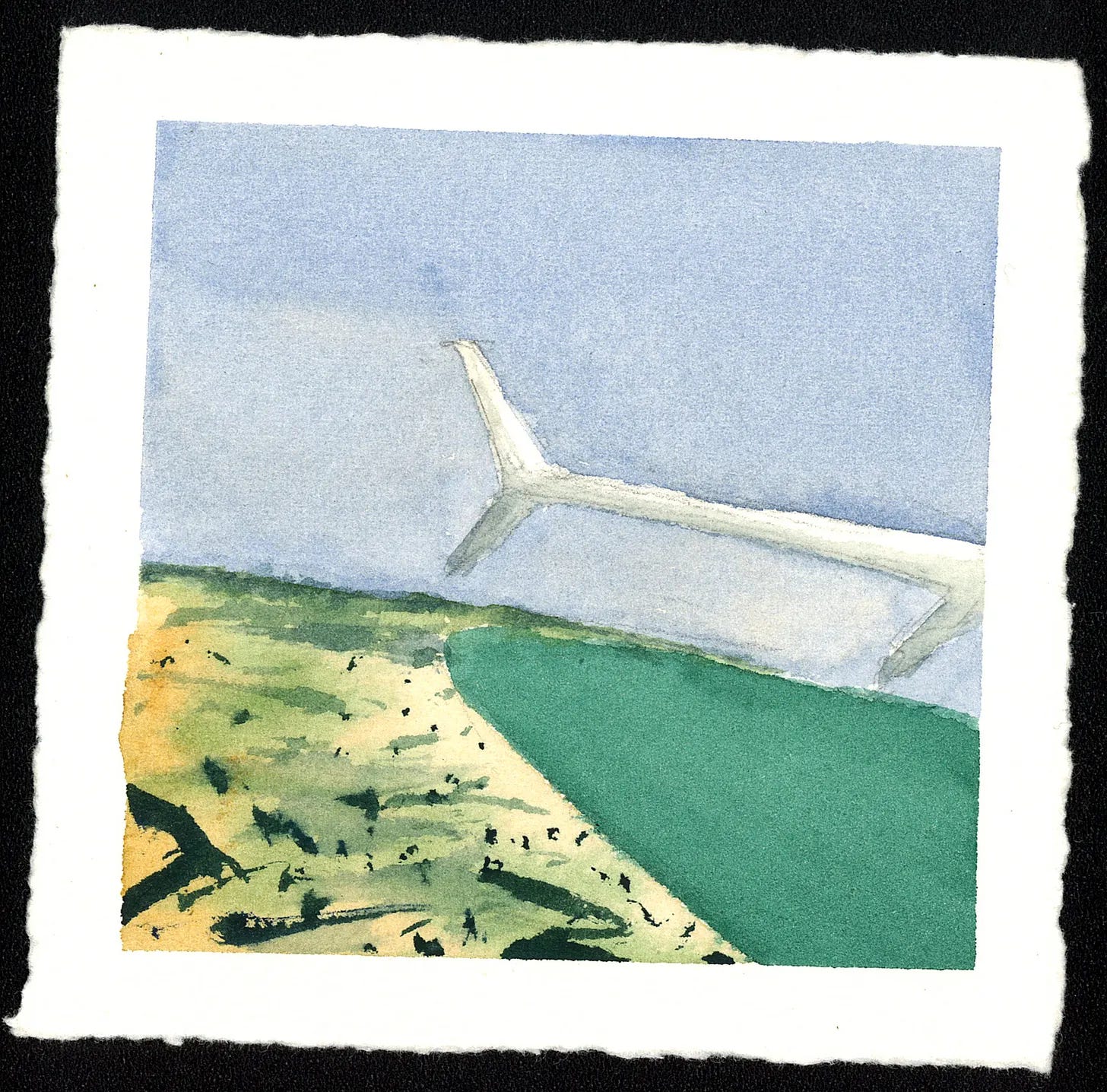
The flight from Mallorca—I got the window seat.
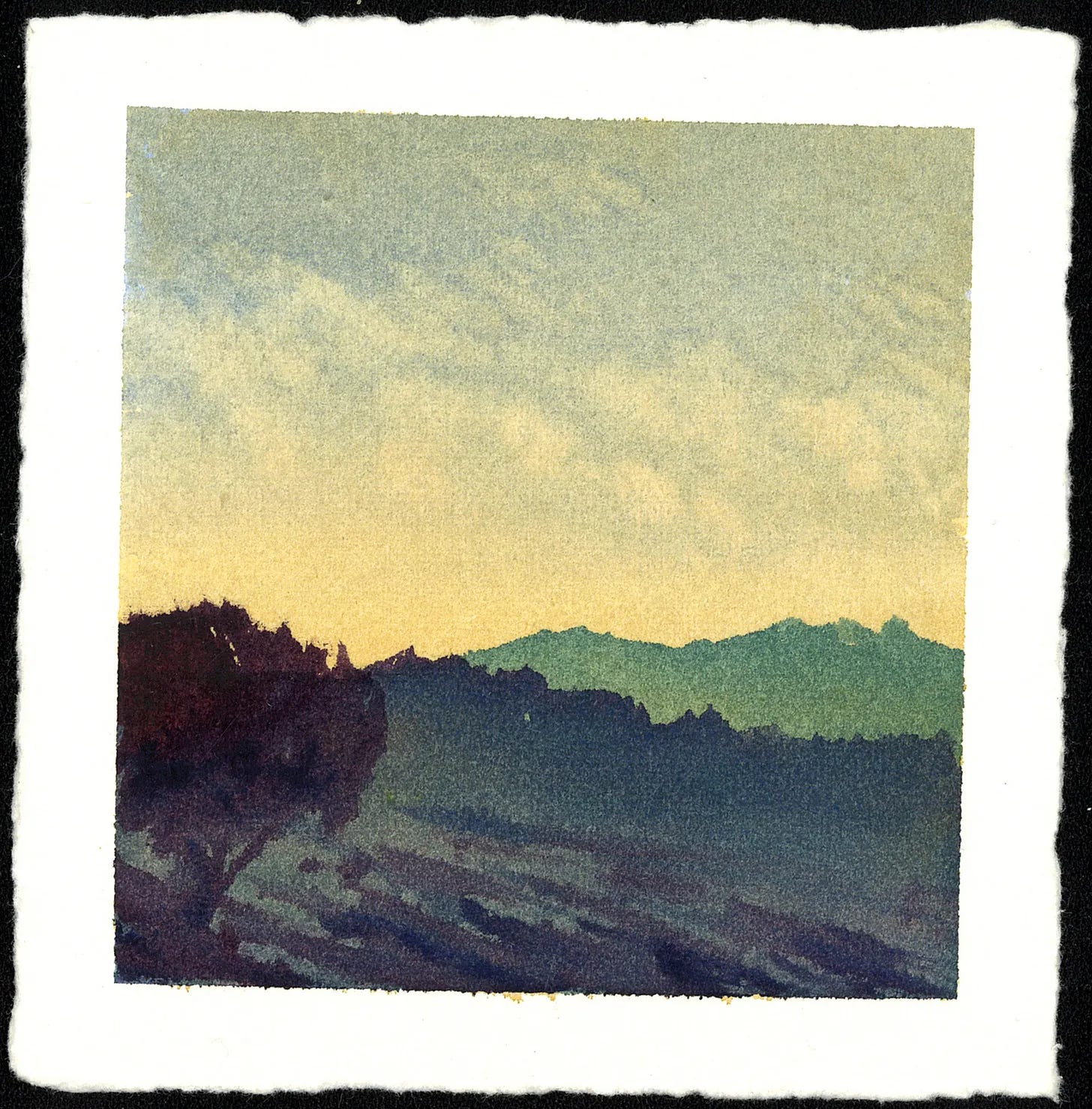
We picked up a car and headed west, the sun was setting over the mountains and the colors were gorgeous.
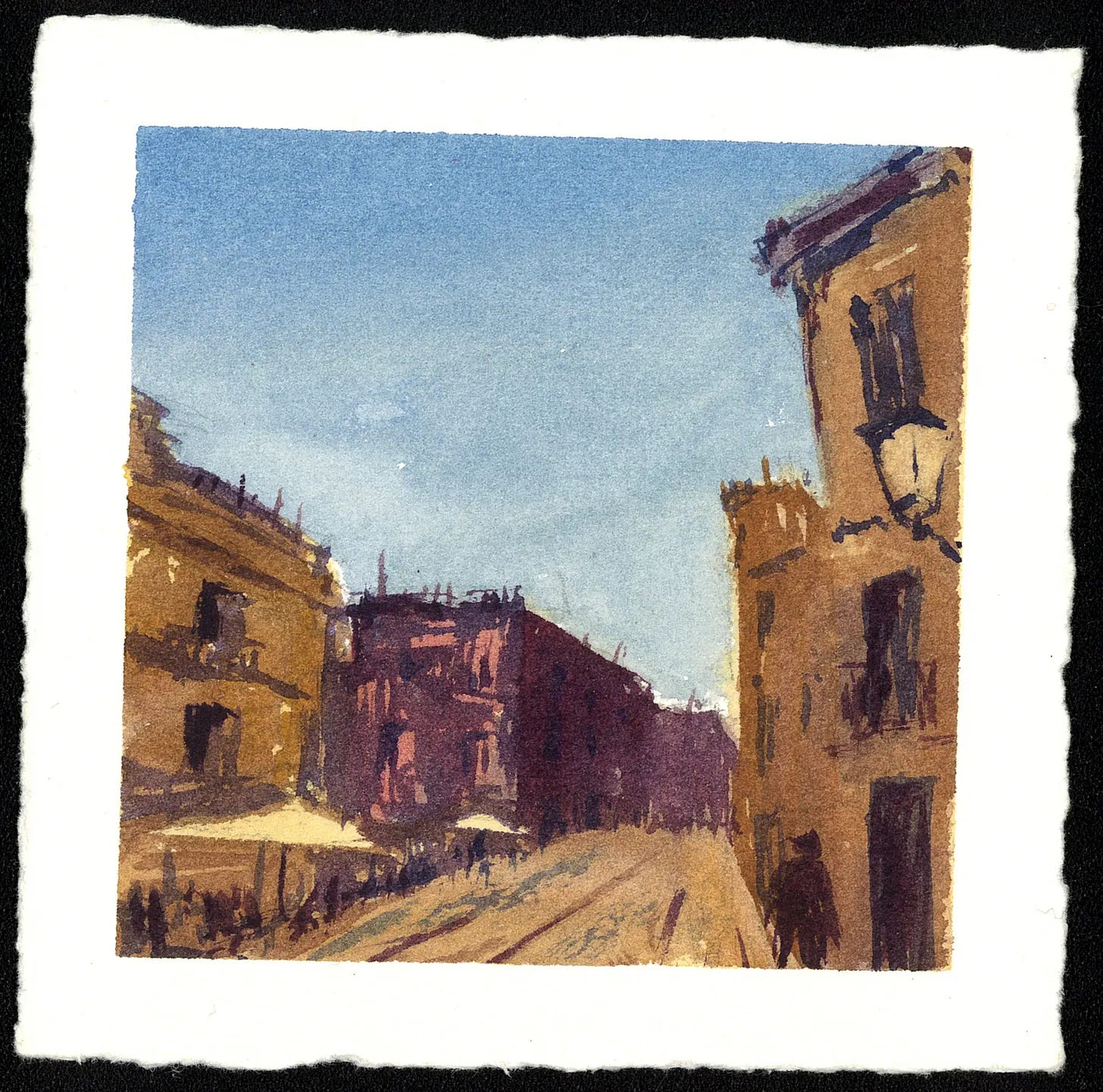
Walked around town that night looking for a place to eat and landed at a spot serving up some traditional Sardinian food—try the Culurgiones when you visit.
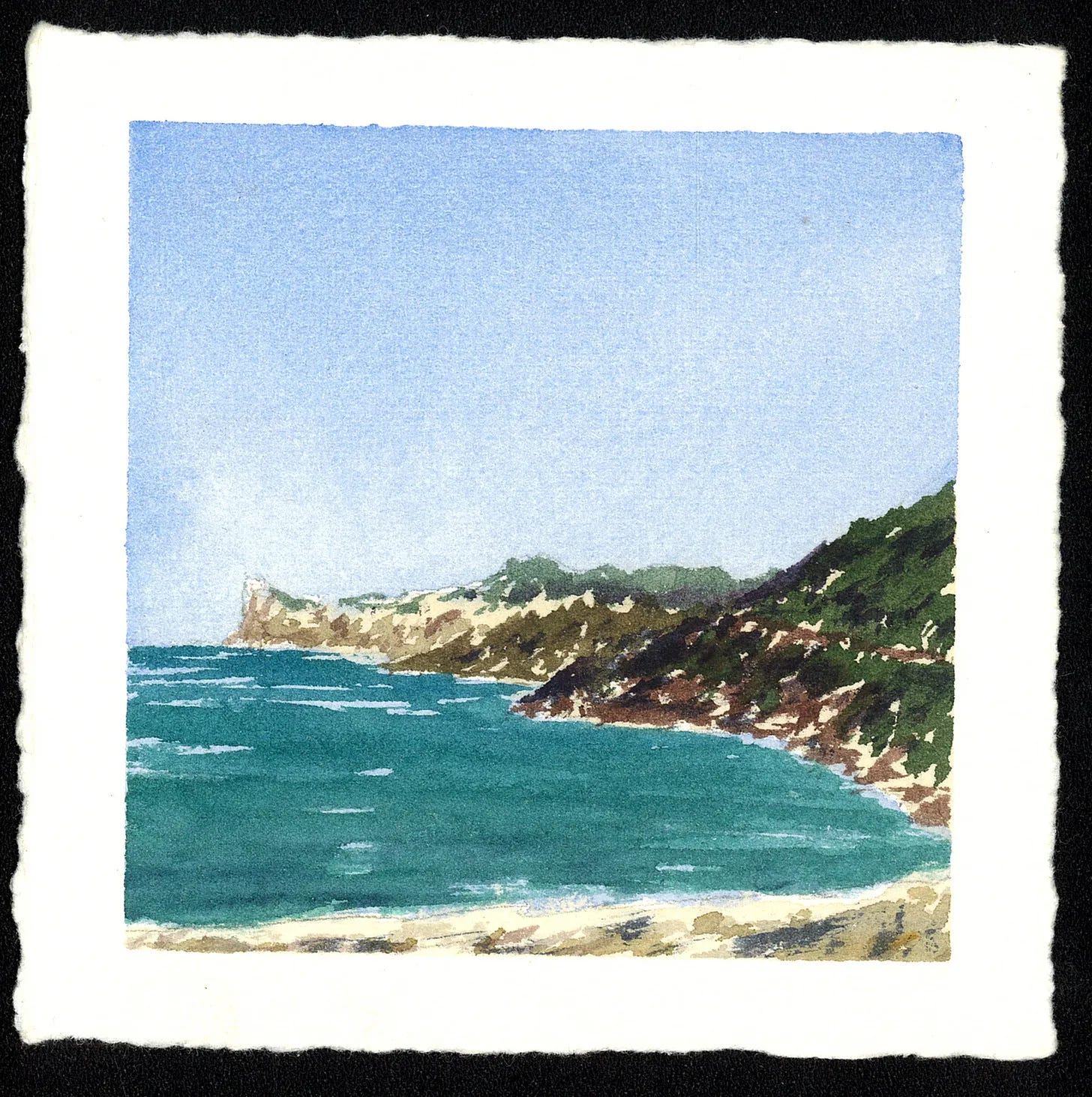
First stop of the next day was at the Fontanamare beach.
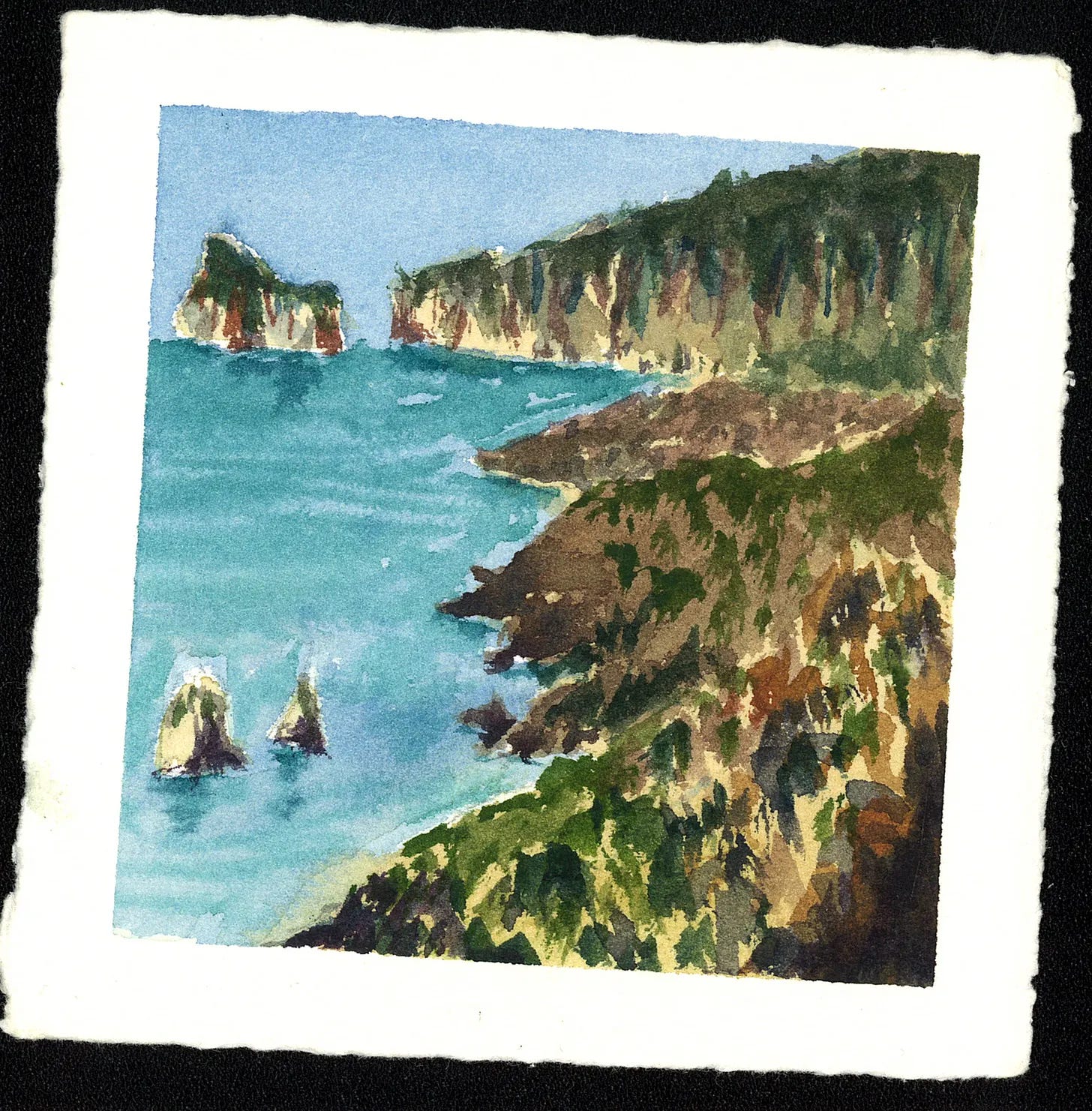
For lunch we headed up the coast and found this pizza spot that overlooked this view. While painting this, it was so hot that every brushstroke dried pretty much instantly.
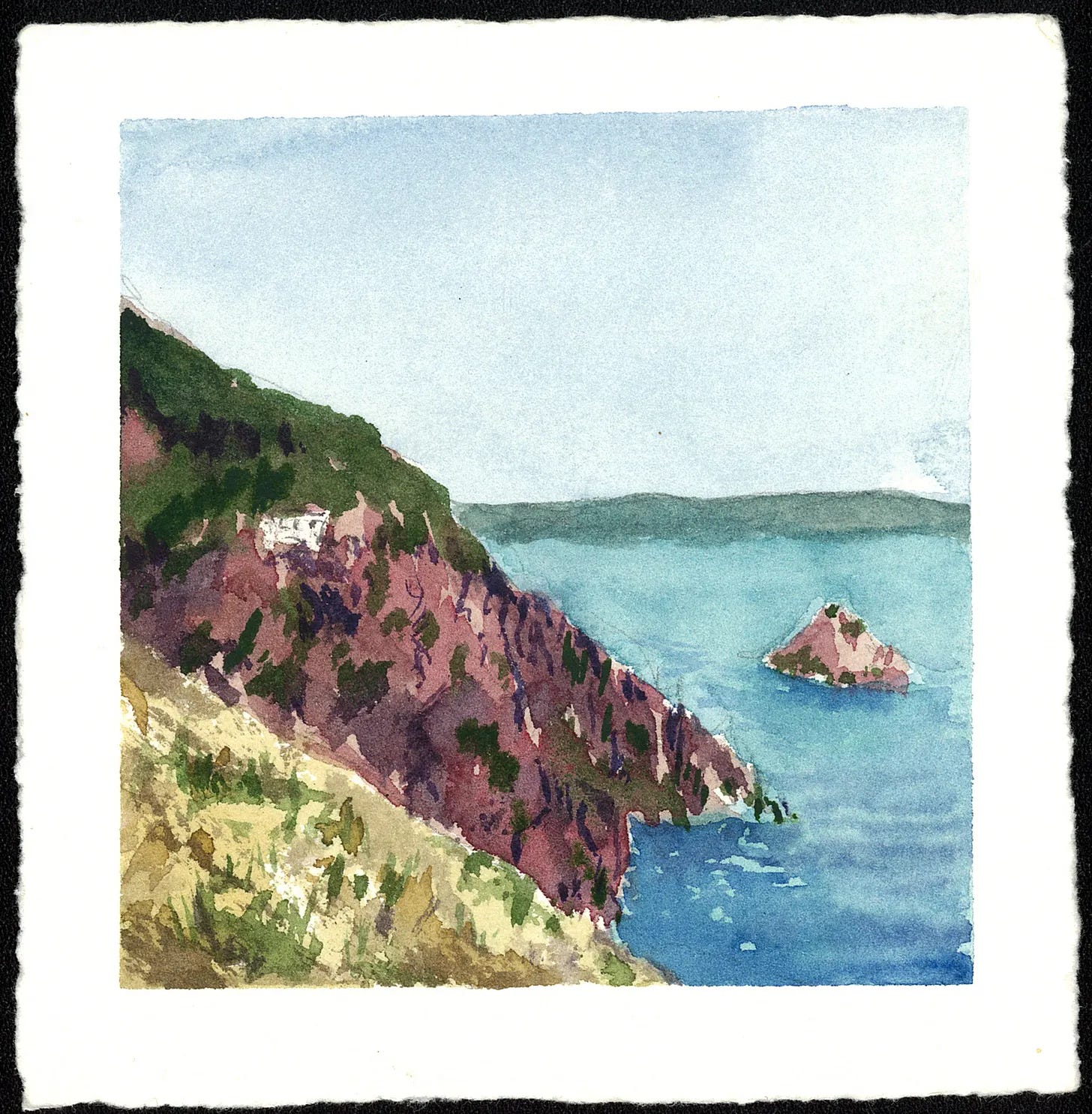
CONTRADICTIONS
LUDDITES
No screen? No problem.
August Lamm, a self-described anti-tech activist, prefers gadgets many people would now consider obsolete. When faced with finishing her first manuscript, she had to go old-school.
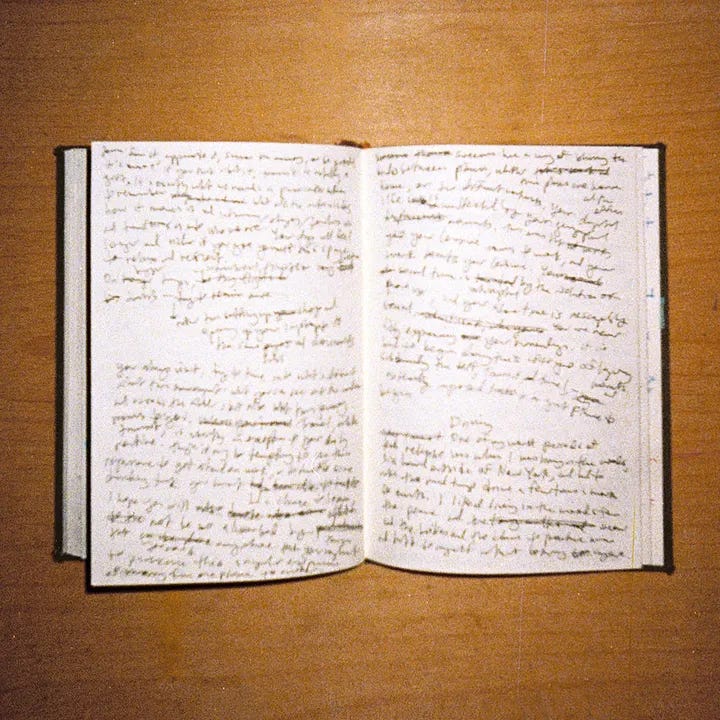
I wrote my book by hand
—August Lamm in August’s Newsletter
When I sold my computer last year, I was in the middle of writing a book. Or, I was supposed to be writing a book. The deadline was just three months away, and all I’d done so far was buy a stack of other books for inspiration.
In an incredible feat of avoidance, I had hand-built a custom bookshelf to hold those books. There was sawdust all over my apartment. I had also taped the table of contents to my wall, and filled a small metal box with index cards. “Convenience,” one said. “Dating,” said another.
Understandably, my editor was starting to get nervous.
How does one write a book without a computer? I did not know, which is why I was stalling. I tried reminding myself that every book published prior to the 1980s was composed on paper. But it was no use: I had grown up in the age of the delete key. In my writing career, I had rarely needed to think through a sentence before typing it out. The thinking came later, in the editing phase.
Now, the only computer I had access to was in the public library, where I could sit for an hour or so before my allotted session automatically ended.
But did it even make sense to compose an anti-technology manifesto on an internet-connected device? Would I be able to resist the pull of email, news, and “research” in a time of unbearable stress?
No, I needed to write my book the old way. I needed to prove it was still possible.
And so, I wrote. As with all difficult tasks, I tricked myself into beginning. Instead of buying a dedicated notebook (which would only become a symbol of doom), I wrote the draft in my existing diary. And I wrote in public, to stop myself from turning inward and contemplating the toil ahead. There was no time for contemplation: the book was now due in a month.
My favorite spot to write was a jazz jam in the West Village. The jam happened daily, after midnight. In the dark of this noisy basement, I would write until four a.m., then I would walk home and collapse into bed, sleeping into the afternoon.
It took a full band, plus six college kids doing back-to-back saxophone solos (if you know, you know), to silence the millennial voice within me, screaming that I couldn’t possibly write a book by hand.
After a few weeks of this, my notebook was crammed with writing. Far from reassuring me, my progress only increased my dread by bringing me nearer to the worst part: typing it all up on the computer.
I dreaded the screentime, yes, but I also dreaded confronting my nocturnal scribblings in the fluorescent glare of the library lights. The draft needed to be good. There wasn’t enough time to start over.

PHOTOGRAPHY

NOVELTY
The joy of hobby-hopping
Grace Byron found herself bored and burnt out. The antidote, it turned out, was starting from scratch.
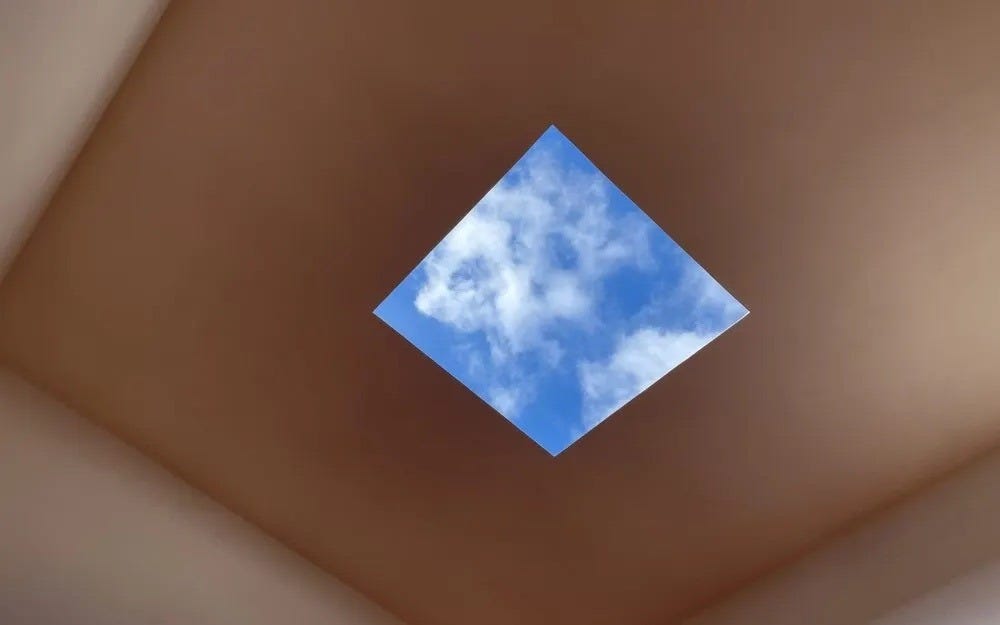
I wanted to become a novice
—Grace Byron in Female Small Business Owner
I have been very, very tired. Burnout feels like such a soft word for the kind of existential ennui I’ve been feeling. I am an overworked and underpaid freelancer with a Protestant work ethic. I have hoped to crack the code of getting a job, but it’s yet to happen. I have asked my non-workaholic friends what to do and had breakdowns in an attempt to look away from the obvious. The problem was that I have lost my sense of curiosity. That’s the only cure for overload. I decided that I needed to find things that could not easily become material, things I couldn’t master. I wanted to be a novice. Perhaps if I forced myself to learn and try new things I would leave my comfort zone while finding a newfound sense of confidence. I would recover that old virtue lost to the algorithm: chance. I hoped this would get me out of my depressive rut. Maybe one of these hobbies would even become a new lifelong obsession. Because I’ve never had a problem with executive functioning, I decided to try out a few classes from my bucket list that I was always too afraid to try.
Since I have horrible balance, I decided the first thing I should try was ballet. I knew I would never become a dancer. My boyfriend dutifully went to Bloch with me to buy a black leotard and nude ballet slippers. I felt triumphant walking by the fountain on the Upper West Side even before I’d executed a single pirouette. I watched tween girls prance past me with ease, far more graceful than I would ever be.
By the time I arrived at my first dance class, however, I was a bundle of nerves. Miraculously, I recognized a few of the other dancers. My fellow students ranged from pros who probably shouldn’t have been in a Beginner I class to neophytes like me who had simply enjoyed seeing The Nutcracker as a child. I went to the barre terrified of looking foolish—the very shame I wanted to shed. I struggled to pronounce, much less remember, the choreography we learned. I went home and woke up more sore than I’d been from years in yoga or running on the treadmill. Still, I felt good. Like I was accomplishing something. After years battling an eating disorder, I’ve tried to find ways of moving my body that don’t feel oriented around merely shedding calories. When we started spinning, however, I came to think that perhaps ballet wasn’t for me. I could not reach the end of the room without wanting to puke from my inelegant twirling. Perhaps I would come back to it, I told myself.
EARTHWORKS
Substackers featured in this edition
Art & Photography: NebeliArt, gathering the debris, Abigail Sandler, Sam Robinson, Jade Stephens, ava
Writing: brenda hashtag, Emiko Davies, Max Annable, August Lamm, Grace Byron

Recently launched
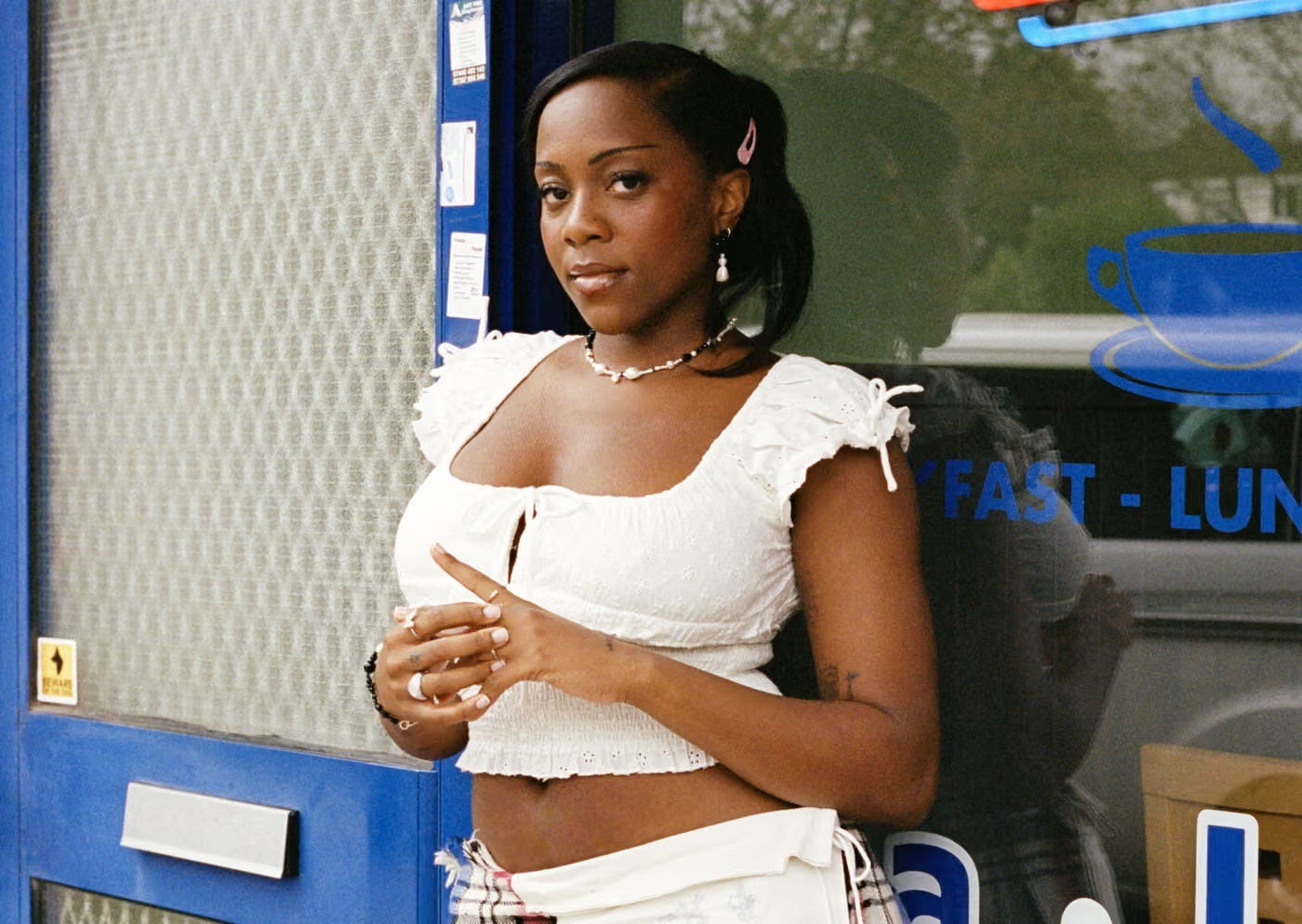
British singer-songwriter Rachel Chinouriri is now on Substack.
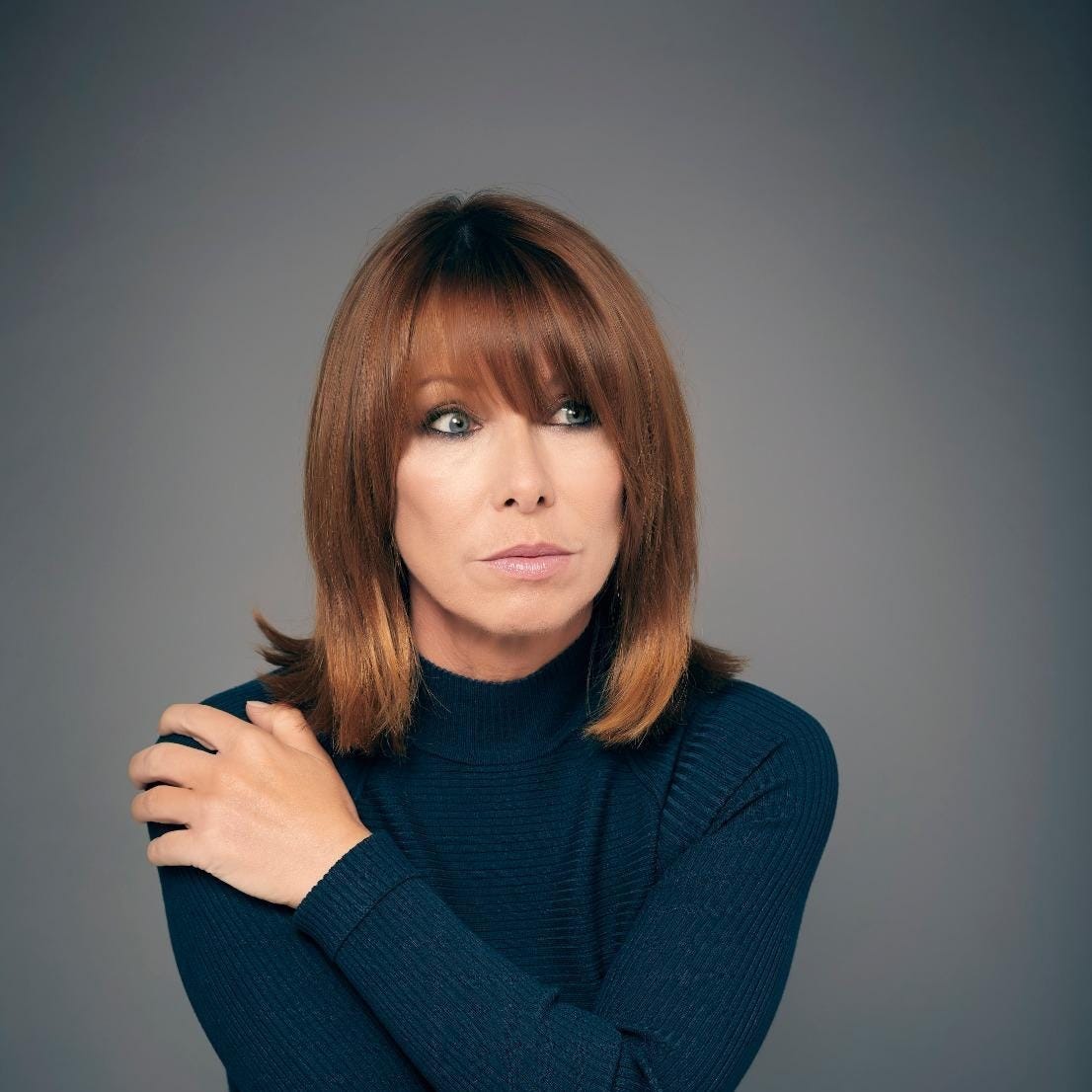
English journalist and broadcaster Kay Burley has launched a newsletter, Burley Alive, on Substack.

Cheryl Hickey, an award-winning Canadian television host, is now on Substack writing about lifestyle and wellness.

Inspired by the writers and creators featured in the Weekender? Starting your own Substack is just a few clicks away:

The Weekender is a weekly roundup of writing, ideas, art, audio, and video from the world of Substack. Posts are recommended by staff and readers, and curated and edited by Danya Issawi out of Substack’s New York office.
The examples of "baseline skills" aren't good or relevant examples. Someone deploying a chatgpt command today to create a video of the same quality that would have taken an hour for a trained, professional video editor four years ago is not demonstrating a higher level of baseline skill. If not for chatgpt, that person wouldn't be able to create the same quality of video without the same practice and learning as the professional.
With cooking, just because someone makes something that _looks_ professional and posts it to their IG doesn't mean that they could recreate it consistently or that it even _tastes_ good. They also don't necessarily disclose how many attempts they made before they succeeded at the final product.
Now elite sports competition, those are higher level baselines, but not because humans are more athletic than they used to be, it's because on top of the same amount of training they do, they also have access to higher quality equipment and facilities, improved knowledge of nutritional science, better pre- and post-workout recovery methods. Elite swimmers started breaking decades-old records because new swimsuit fabric technology allowed them to achieve greater hydrodynamic efficiency with the same strokes and skill, it didn't just allow a person who never trained or competed to dive in and start breaking records.
Reading is also a baseline skill that seems to be getting worse, not better, with the advent and availability of intellectually assistive technology. Sure, you can ask chatgpt to generate a summary of pride and prejudice in lieu of reading it, which you could then memorize, but that doesn't improve your baseline skill of the ability to read, it makes it worse because the only way to get better at reading is to READ.
But maybe the title is intended as ironic rage bait and I've wasted 15 minutes of my time conveying some ways that baseline skills are not elevated from what they used to be.
For example:
Spelling
Manners
Using turn indicators
Putting the shopping carts away
Not littering
Wiping down the gym gear you just used
Returning your tray