


This week, we’re reading buzzy novels for free, turning cakes into canines, and squeezing our lemons while we still can.
LO-FI LIVING
Reflecting on life sans smartphone
Katie Lowe ditched some of the comforts, and distractions, of the modern world two years ago. Was it worth it?
Do you really want a “slow life”?
—katie lowe in Rayon
I’m coming up on the two-year anniversary of my analog experiment, which, day by day, feels less like an experiment and more like a new normal. Through writing, I’ve tried to unearth what my daily life looked like before I did this, to compare, but really, the way that I think about time and my role on the earth now is so changed that it’s almost impossible to truly understand my former self. Perhaps I shouldn’t try to compare or explain my growth, but instead, in showing how I spend time in the world now, you might understand where things diverged.
At 5pm, my day becomes extraordinarily quiet. Closing down my laptop or desktop computer and leaving my home office feels like stepping into a boat and rowing softly away from shore. My thoughts become slower and quieter as I row, the waves lapping softly as I re-enter domestic life. I wander downstairs, stare blankly into the middle distance, prepare a snack. Lap, lap, lap.
My partner arrives home late or not at all, is traveling for work. The openness of the evening stretches out ahead of me, a tinge of anxiety fills me. I put a record on. I’ve got a million things to do and I haven’t done a single one.
If I’m feeling avoidant, I pop open my laptop and check my personal email, nothing. Close the laptop again, reconsider.
I wander outside, in the garden I pick weeds for a half hour and then decide to call a friend who lives far away. We talk for two hours as my hands move amongst grass in the raised beds and pull stubborn wild carrots from our gravel patio. Then it’s time for dinner. Dinner is either hummus and carrots or immensely elaborate because there’s nothing else to do. After dinner, I’m exhausted and somehow haven’t sat down since my workday, so I lie on the couch with some music on and read 30-40 pages of a book until I’m tired. My partner crawls into bed, we talk about our days, looking each other in the eyes until one of us closes them.
Or instead, the weeding turns into garden work. I decide to move some plants that aren’t happy where they are; cut down the invasive bittersweet, again. I clean out the chicken coop, refill their waters, put down new shavings, add grain to their indoor and outdoor dispensers, give them each a snuggle against their will, and scrounge up some wilted vegetables from the fridge to feed them. All of this is done silently, task after task, nothing distracts me as my brain processes the day or an old argument with a friend or dreams about the future or considers absolutely nothing at all. I go inside and check my phone, a friend texts to meet at a bar. I wash up, scrubbing the dirt out from under my fingernails and walk there, because there’s plenty of time. I wait at the bar with nothing to do until my friend arrives, noticing people and perhaps ending up in a conversation. People talk to you when you look around the room, when you look like you are waiting for something. And it’s true, I am waiting for something. I’m waiting for something interesting to happen. The rest of the evening slips away and I climb into bed, open my book and fall asleep immediately.
[...]
Slowing down sounds admirable until you realize that most of slowness is just being bored and alone in your thoughts and rituals. Letting boredom in is transformative, yes, and being alone with your thoughts is a necessary daily practice for self-growth, indeed—but these can be uncomfortable states. Boredom was extremely uncomfortable for me when I first got rid of my phone. I felt that boredom was a failure, that my mind should either be productive all of the time when engaged or, when not engaged, immediately enter a flow state of total zen. I started to see boredom as a gray area that I waded through as I oscillated between the two ideals.
STILL LIFE
WRITING
“Is literature—a novel, a newsletter, this magazine—a product?”
The pressure on “writers” to be “influencers” continues to build.
The Lamentation of Natasha Stagg
I’ve never not worked, in addition to writing. My books are not a job, because no one needs them; their superfluousness is essential to their literariness, by my own estimation. I’ve published four, with one very cool indie press, Semiotext(e). Each was, as they say, well received. None were, as they say, top earning. After enough favorable reviews accrue, someone always comes out of the woodwork to offer me career advice about the next one. I have grown to hate this part.
My “day job,” though, is in advertising, where effective writing is disruptive, sticky, urgent. These descriptors are not applicable to literature. They are what sells the product, not the product itself. Is literature—a novel, a newsletter, this magazine—a product? In many ways, yes, but then again, no. The product, or what has the price tag, is only the access to something intangible.
Things have really changed since I published my first book, Surveys, a decade ago. When I speak with younger writers, it’s always about money, as in windfalls: huge advances, speaking fees, film rights. They sound, increasingly, like the people I know who work for startups. Now, everyone relies on the internet’s algorithmically produced numerical values to tell us what is popular or worthwhile. Analytics play a part in acquisitions. The definition of literary is being renegotiated so it may include, for example, influencer memoirs. All of this is a supreme distraction from the concentration it takes to write a great American novel.
On my way to a lunch meeting with a literary agent—someone who connects writers to publishers, thereby smoothing the path toward a bigger, longer, more moneyed career, ideally—I think about the word agency, how it has been pried from regular language recently and pasted all over startup ads.
Things are agentic now. Taste is a commodity. The state of authorship is being questioned. I’m being asked to discuss the commercial viability of my work, or maybe myself. All I can do is say I have it, even though I don’t believe that. Honestly, I don’t even want it.
I imagine the best-case scenario, my life with the perfect agent: a buffer between myself and those entities asking me to do regretful things such as listicles and selfie videos, which only take focus away from the books I’ve written. A publisher offering me an advance for a book I have yet to write. A grant committee selecting me based on merit and not a book-length application.
There is an author making waves right now because she was offered a cash prize and then crushed by its cross-promotional requirements—a video interview, an audio interview, a pre-interview, a photo portrait, festival participation, social obligations, an original piece for a journal, and then the endless email negotiations about timing and logistics.
Eventually, she admitted that she was not mentally well enough to do all this, that what was originally described as no-strings would end up derailing her from a plan to detach from society and simply write.
Whatever happened to having one bio photo for your entire life, to instability being a hallmark of the literary greats? It’s all so humiliating, the author laments, in a blog post. I wish, for her sake, she had paywalled it. If it’s not obvious, I love her.
The agent, one of many I’ve met over lunch, wears a suit. Or he wears a blazer and pants and a tie and a shirt, none of which come from the same store, it is clear. I’ve tried, up to the last minute, to put this off until the appointment naturally dissolved, and yet somehow, it is happening—proof enough, maybe, that I need an agent, if an agent can save me from unspecified lunches with men in non-suits.
DOG TREATS
MUSIC
Dolly Parton on her sense of self
A peek into the singer’s process and personal growth.
Songteller: Shattered Image
I think “Shattered Image” is a song that so many people relate to, especially in show business, because it’s more about how, well, you don’t have to be in show business for somebody to shatter your image or ruin your reputation.
But when I wrote that song, that was back during the early days when I was just really not used to people saying bad things about me, especially if they weren’t true. And some of them are true. And a lot of those stories in the tabloids, like I’ve always said, they’re based on some thread of truth, but usually it’s so frayed by the time they get done with it, you don’t hardly even recognize it.
But I don’t mind so much what they say about me as much as it hurts other people, and I hate that. I can handle it myself by saying what I say, doing what I do, and saying I don’t deny nor admit anything. But when they drag other people into it...
ART
FICTION
A novel idea
An excerpt from MacKenzie Scott’s new book, which she’s serializing on Substack.

Wednesday
—MacKenzie Scott in Last Days in Two Nations
Hannah sat on the edge of her bunk in her towel and shower shoes, looking down at her soap case. The piece of broken bottle was still buried deep in her soap. This self-improvement center dorm was just an old high school building, and the communal shower had operable windows, but still they had all agreed they would shower one at a time. They were like the passengers on Flight 93. Once a thing like murder with a plane full of commuters had happened, it could never happen exactly that way again. You can’t talk that way, her mother used to tell her. There’s nowhere good to go with outrage like that. But in high school Hannah had fallen for a girl who was dying of cancer, and her mother had argued against her love just like she argued against her rage. When Hannah read Barthes’ words in college, she clapped the book shut with satisfaction and took the bus to the cemetery to read it over the girl’s headstone, raining tears her mother would have cautioned against on her grave: “Someone tells me: this kind of love is not viable. But how can you evaluate viability? Why is the viable a Good Thing? Why is it better to last than to burn?”
It was almost Hannah’s turn in the shower.
She watched each of her bunkmates come back.
First Viola, her hair wrapped in a towel, awarded her scholarship for asking her neighbor a question.
A minute later Beth, her hair dripping, granted her free year because her elderly parents had tested positive for the gene.
Next Millicent, shivering. Every day Millicent had a new guess about why she was here.
But Hannah didn’t have to guess about herself. Hannah knew.
When the door to her classroom had opened last year, she’d been grading papers. Other teachers complained about it, and it was time-consuming, but it had always been her favorite part. She liked the little window it gave her into each kid’s mind and heart. They were all so different. When she was little herself, she had thought she would have a lot of kids someday, but Hannah still wasn’t married, and even if she had been, she wouldn’t want to have kids in a country like this. They had taken the fun out of the idea. Hannah liked potluck. She liked surprises.
Not the kind that had just come through the classroom door, though. The guy who opened it was a membership jackass. He’d been a jackass in high school too, and his jackboots were polished to a high shine. She had set her pen down and fixed a smile on her face. The smile was all she would give him. She would not say welcome. She would not say how can I help.
“Hannah Hamberger,” he said, as if it made him a standup comedian, just saying her last name. Somehow her fifth graders’ buoyant relish when they said it delighted her, but in his mouth the enjoyment was small and witless. “Sorry to interrupt.”
But he wasn’t sorry. He was happy to interrupt, anyone could see that. He flipped up one of the flaps on his goon belt and took out an apple. He set it on her desk and smiled a little. She had known what was coming, and she knew she wasn’t going to give him everything he had come for, so she smiled a little at the apple. She even thanked him for it. As a small counterbalance to what she knew she was about to do.
“You’re welcome,” he had said. He was grinning now. He was handsome, the kind of guy in high school who you just knew spent a lot of time looking at himself in the boys’ room mirror, when he wasn’t grabbing smaller kids by the shirt collar to drag them for swirlies in the stalls. “Take a bite,” he said.
Hannah did a little calculus in her mind and took a bite of the apple. Just a regular bite, but she felt almost dirty doing it, and her heart was racing. I will do these things, because I am about to defy him. That’s what she had been thinking.
“It’s good, right?”
“Yes.”
“Imported from Washington State. They have the best apples.”
Hannah didn’t think she had to say anything to that.
“Only the best for the best teachers,” he said.
The apple had left a sweet taste in her mouth she didn’t like. She’d still be tasting it even after he left, she thought.
“I was wondering if you had anything for me this time,” he had said.
“Not yet.”
“That’s what you said last time. It’s December. You’ve had plenty of time to get to know them.”
“Maybe I’m slow.”
“You weren’t in high school, I remember. You got the best grades. I was always trying to sit next to you to get a look. Two kinds of looks, actually.”
This time she didn’t smile.
That cost her. “And you were sort of political if I remember correctly. Isn’t that right?”
But Hannah wasn’t going to let him scare her this way. She wouldn’t let him change what she was going to do. She looked back down at her papers.
“What are you doing there?” He lifted his chin like a horse, pointing it at the papers on her desk.
“Grading papers.”
“What kind of papers?”
“English papers,” she said. He already knew she was an English teacher. It wasn’t really an answer.
“What kind though? The kind where they share opinions? The kind where they make things up? I could just read them myself, you know I could.”

FAUX FLORA

RECIPES
Summer isn’t over yet. Let’s cook like it.
Andrew Gruel serves up a citrusy, savory, seasonal dish, all for about $5 a person.
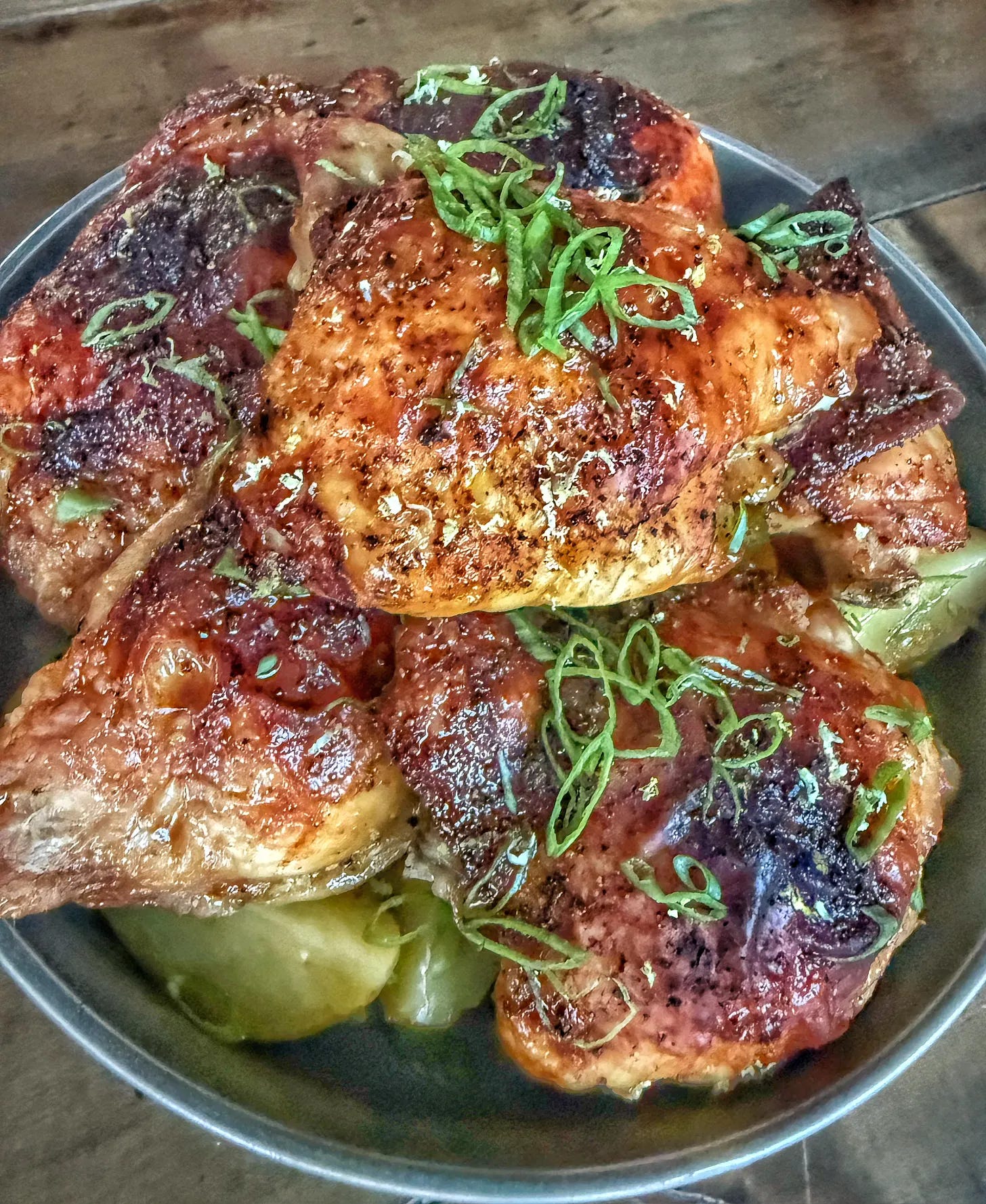
Smoky Lemon Chicken & Crispy Potatoes
—andrew gruel in American Gravy
One of the biggest myths about cooking with real, whole ingredients is that it has to be expensive. Trust me, it doesn’t.
This is exactly the kind of dinner I love—chicken, potatoes, butter, lemon and spices. Nothing here is complicated; you don’t need to hunt anything down at a specialty grocery store, and nothing here requires you to spend two hours in the kitchen.
The key is to take inexpensive ingredients and treat them properly. Bone-in, skin-on chicken thighs are one of the best values in the meat case, and in many grocery stores, they’re regularly on sale. They’re also incredibly forgiving. As chicken legs cook, the skin gets crispy while the meat stays juicy, and as they roast, all that chicken fat renders down onto the potatoes underneath.
Then we give the whole thing some “chef” treatment—lemon zest, paprika, and an optional dash of turmeric on the chicken before roasting, followed by a smoky lemon-butter sauce spooned over everything at the end.
One pan, four people—it’s real food that costs less than $20.
INTERIORS
Substackers featured in this edition
Art & Photography: Anna Hultin, Carly Kuhn, Sophie Bamford, LoLo, Henri Purnell, Derek Guy
Video & Audio: Dolly Parton
Writing: katie lowe, Natasha Stagg, MacKenzie Scott, andrew gruel

Recently launched
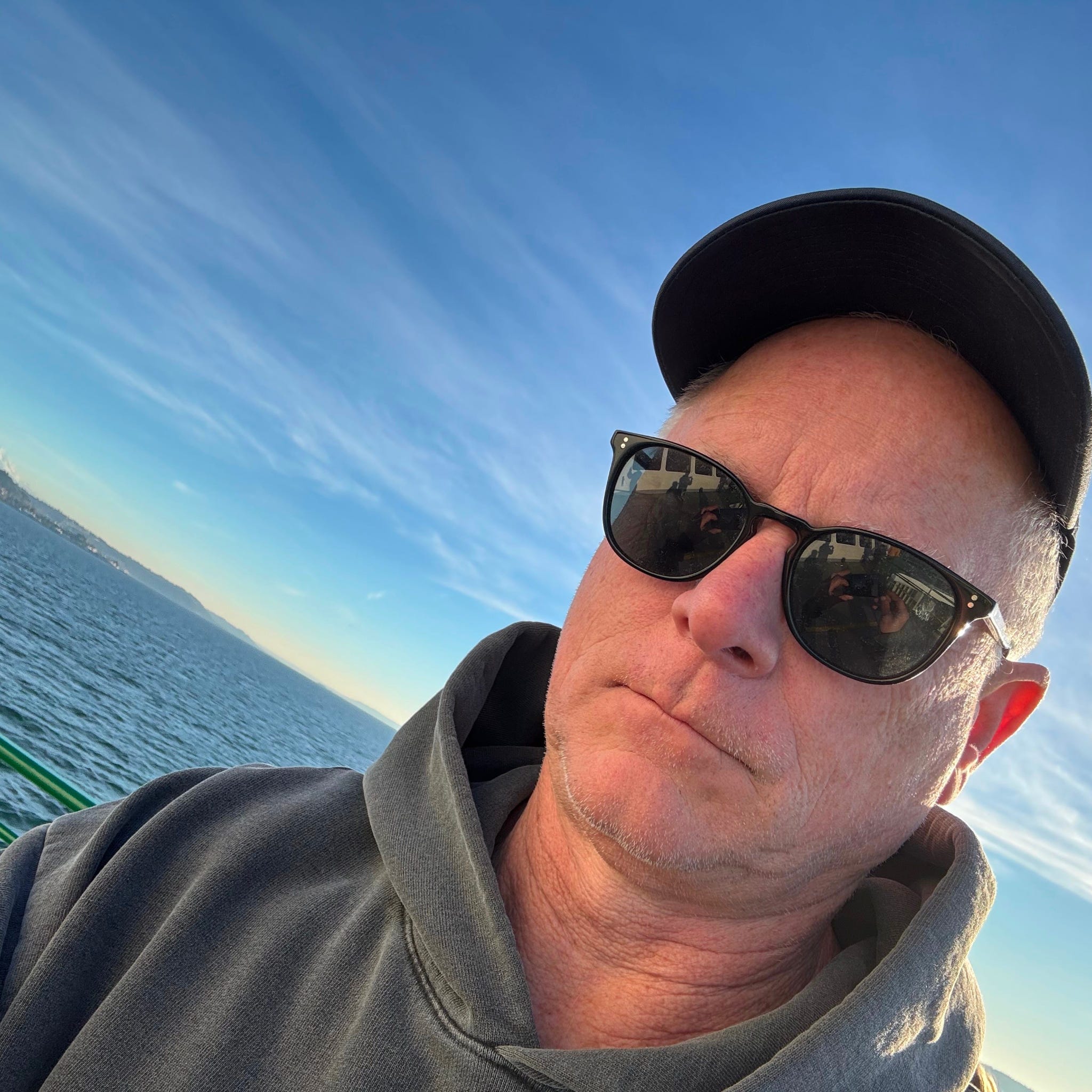
ESPN SportsCenter fixture Kenny Mayne has launched a Substack to deliver original videos and writing about the NFL.
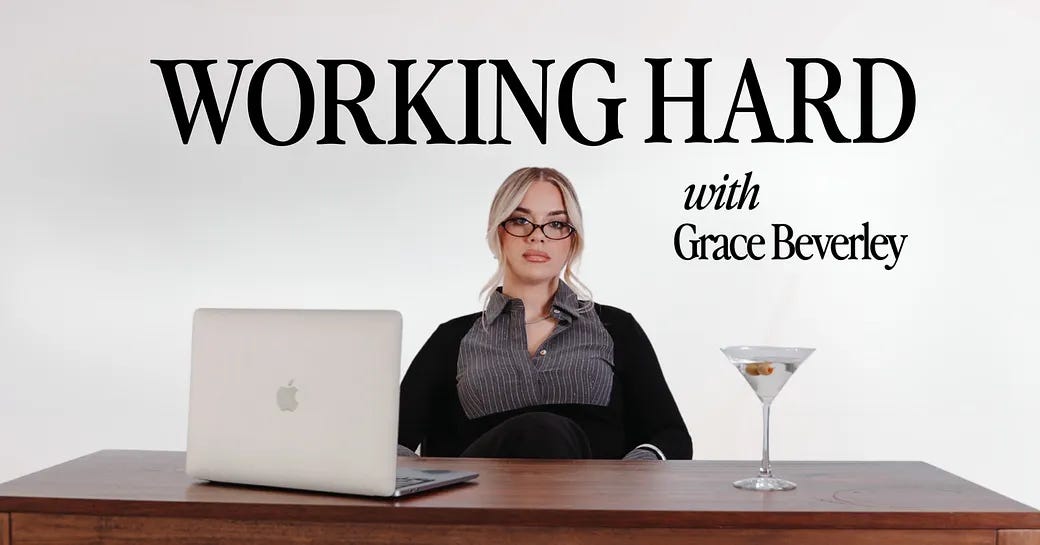
U.K.-based podcaster and entrepreneur Grace Beverley is now on Substack.
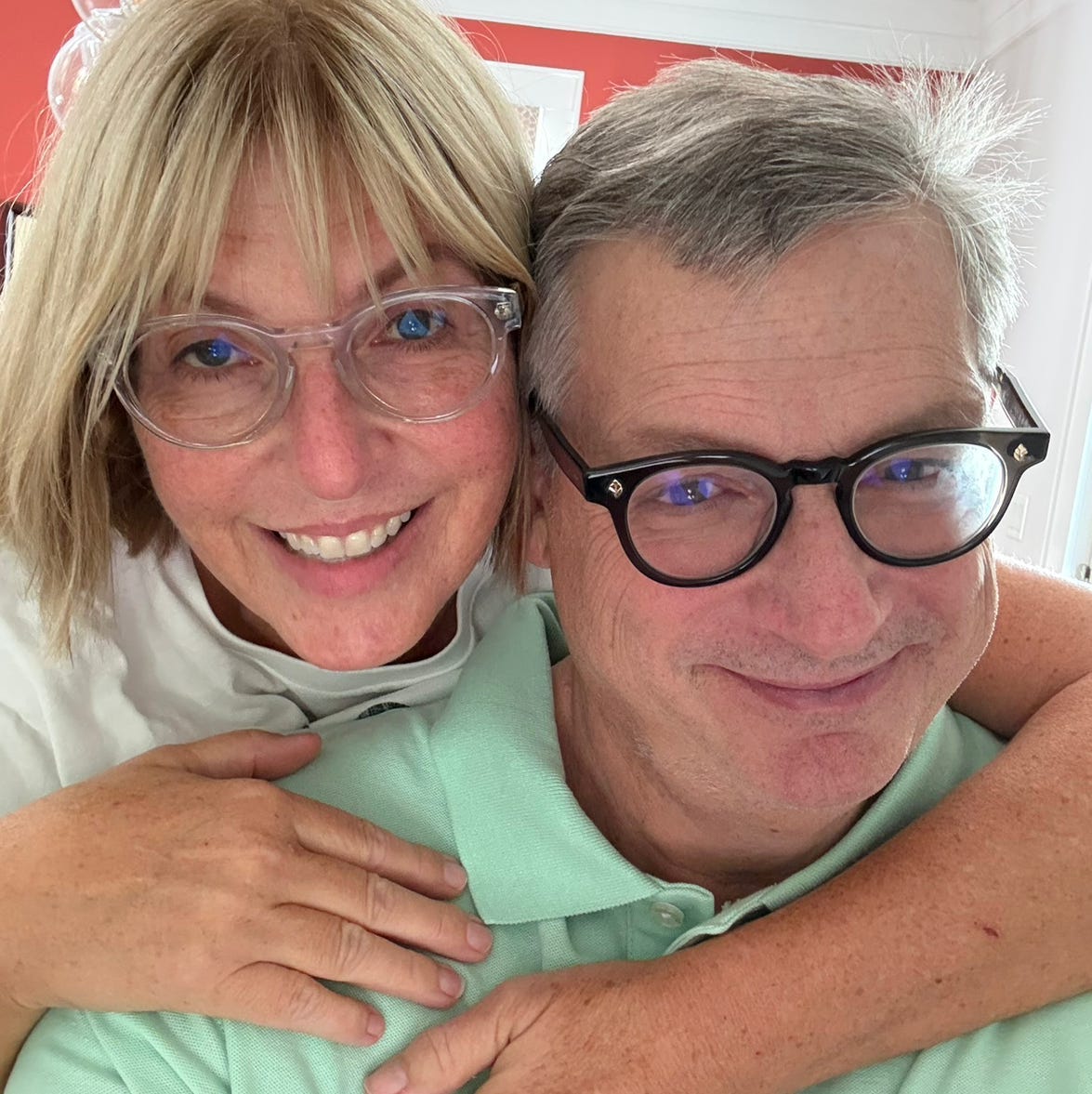
New York Post sports columnist Mike Vaccaro has joined Substack.
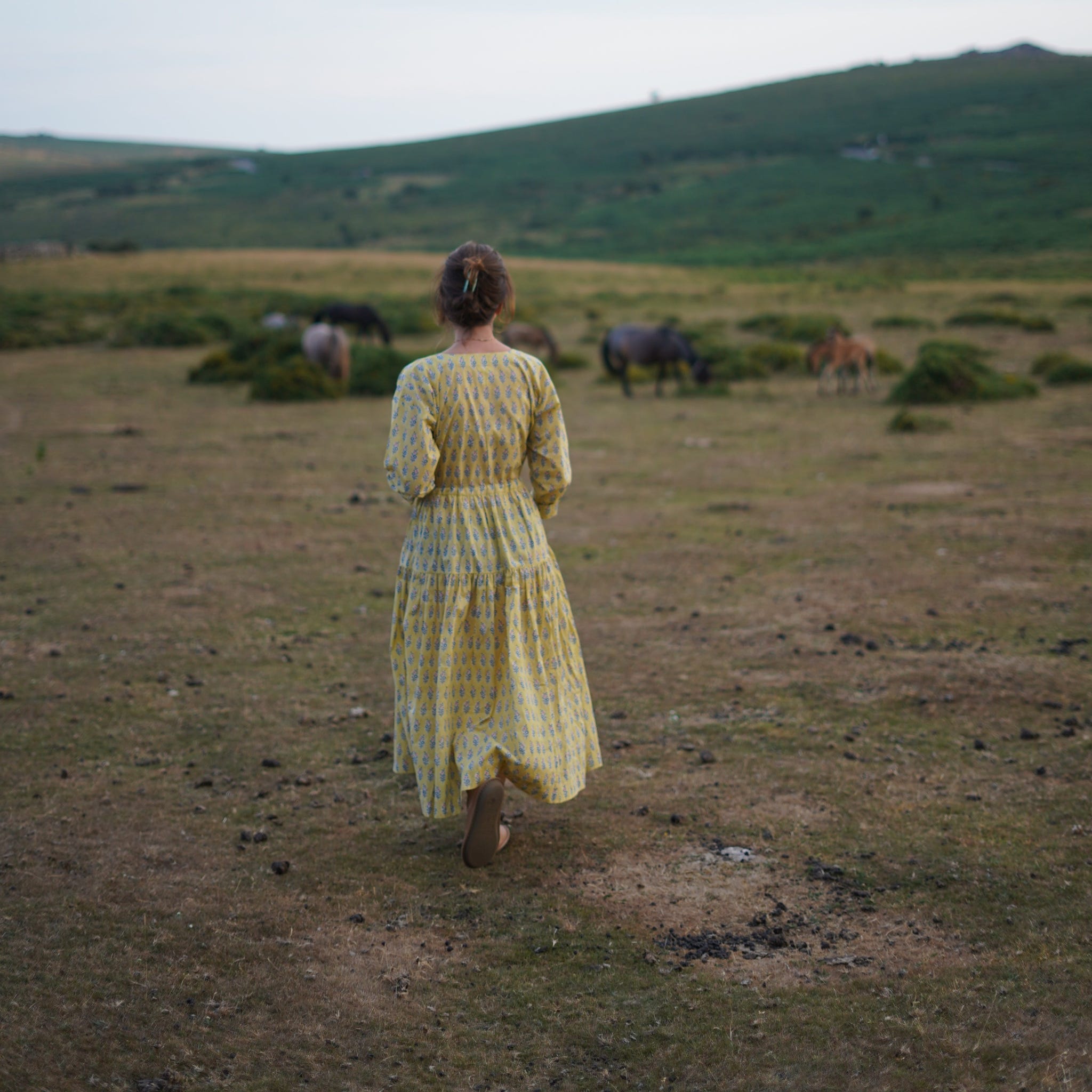
Gabby Deeming, former decoration director of House & Garden and the founder of Daydress, is now on Substack, where she’ll write about interiors, share styling ideas, and offer her finds.

British historian, broadcaster, and podcaster Suzannah Lipscomb is now on Substack.

The British arts organization The Barbican is now publishing on Substack.

New York sports publication Underscore is now live. The collective, which features former reporters from Sports Illustrated and The Ringer including Salvatore Piombino Licata, John Jastremski, and Jimmy traina, will cover sports business and New York’s professional teams.

Inspired by the writers and creators featured in the Weekender? Starting your own Substack is just a few clicks away:

The Weekender is a weekly roundup of writing, ideas, art, audio, and video from the world of Substack. Posts are recommended by staff and readers, and curated and edited by Danya Issawi out of Substack’s New York office.
There is absolutely nothing wrong with being alone in your thoughts and rituals.
We have collectively become afraid to be alone with our own thoughts, and that is our loss.
That’s still an admirable thing to do. There are many people out there who can’t stand their own thoughts, so they do what they can do avoid it.