

“Could I really claim these hallmarks of adulthood if the only thing making them possible is my father’s generosity?”
In this edition of the Weekender: music as a measure of virtue, Phia’s possible legal troubles, and tasting Parisian produce 40 years later

This week, we’re asking questions about sales on BookTok, what happens next for Phoebe Gates, and dads with disposable income.

MUSIC
Is “Happy” by Pharrell Williams actually a scourge on humanity?
An investigation into the morality of background sound.
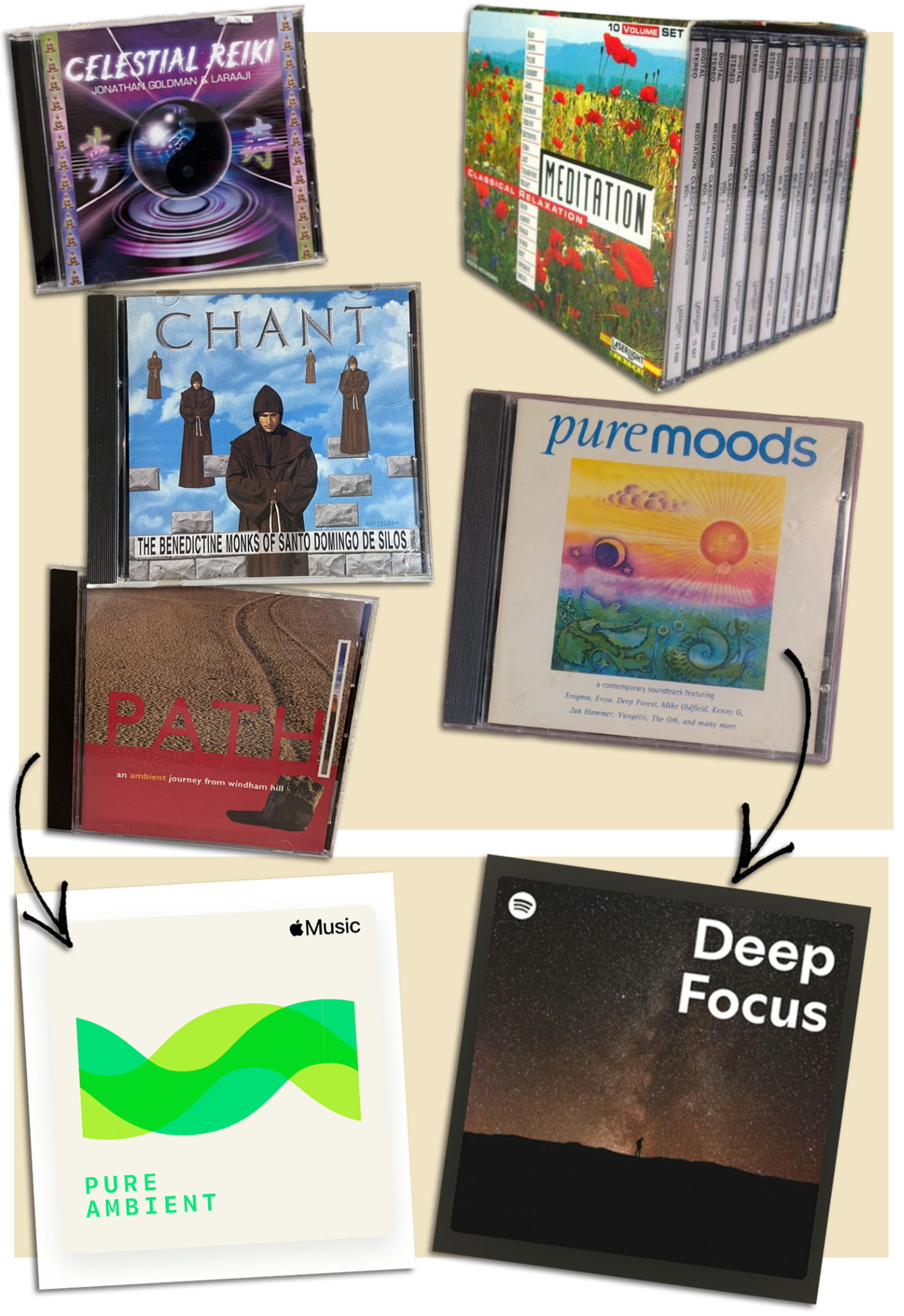
Is ambient music evil?
—Jonah and Erin in Blackbird Spyplane
Can music be evil? I never really thought about it until a few years ago, when I listened to an interview with Nick Cave during which he asserted that it cannot—“that music in itself has a moral dimension. That it’s essentially good. That it works to improve matters.”
Cave argued that this is true of music even at its most hateful, violent, inflammatory, abject, nihilistic, etc.—true, for instance, of the misanthropic music he himself made early in his career. Starting out, he explained, he’d sought the “transcendent impulse in chaos.” He’d been “a drug-addicted young guy” with a “jaundiced, contemptuous view of humanity,” and although this view was “extreme,” it was “also the way a lot of young people see the world, and in many ways, from their perspective, quite rightly so.” Jaundiced and contemptuous music, Cave said, contains the same “potential for doing good” as any other kind.
I think back to this interview whenever I encounter music that seems saturated with malevolent energy. Filosofem by the Norwegian neo-Nazi black-metal band Burzum… “Happy” by Pharrell Williams… brat by Charli xcx … I hear music like this and I wonder if, in its foul and airless vision of the human soul, it counts as evil. But I return to Cave’s absolutist stance, that there is a radical, salutary potential in the act of making and listening to music, and that even the most antisocial, insipid, cynical, narcissistic, and otherwise evil-seeming music is, for that reason, good at its root.
I do think it’s possible to affirm this essential goodness, however, while allowing for cases where music can be twisted to evil ends. And recently, I’ve been wondering whether one of my favorite genres—ambient music—is especially well-suited to evil purposes, albeit in a banal and sneaky way that has only become clear in the past few years.
LITERATURE

MONEY
More money, more problems?
Allison Raskin, who receives financial assistance from her father, examines what independence really means.
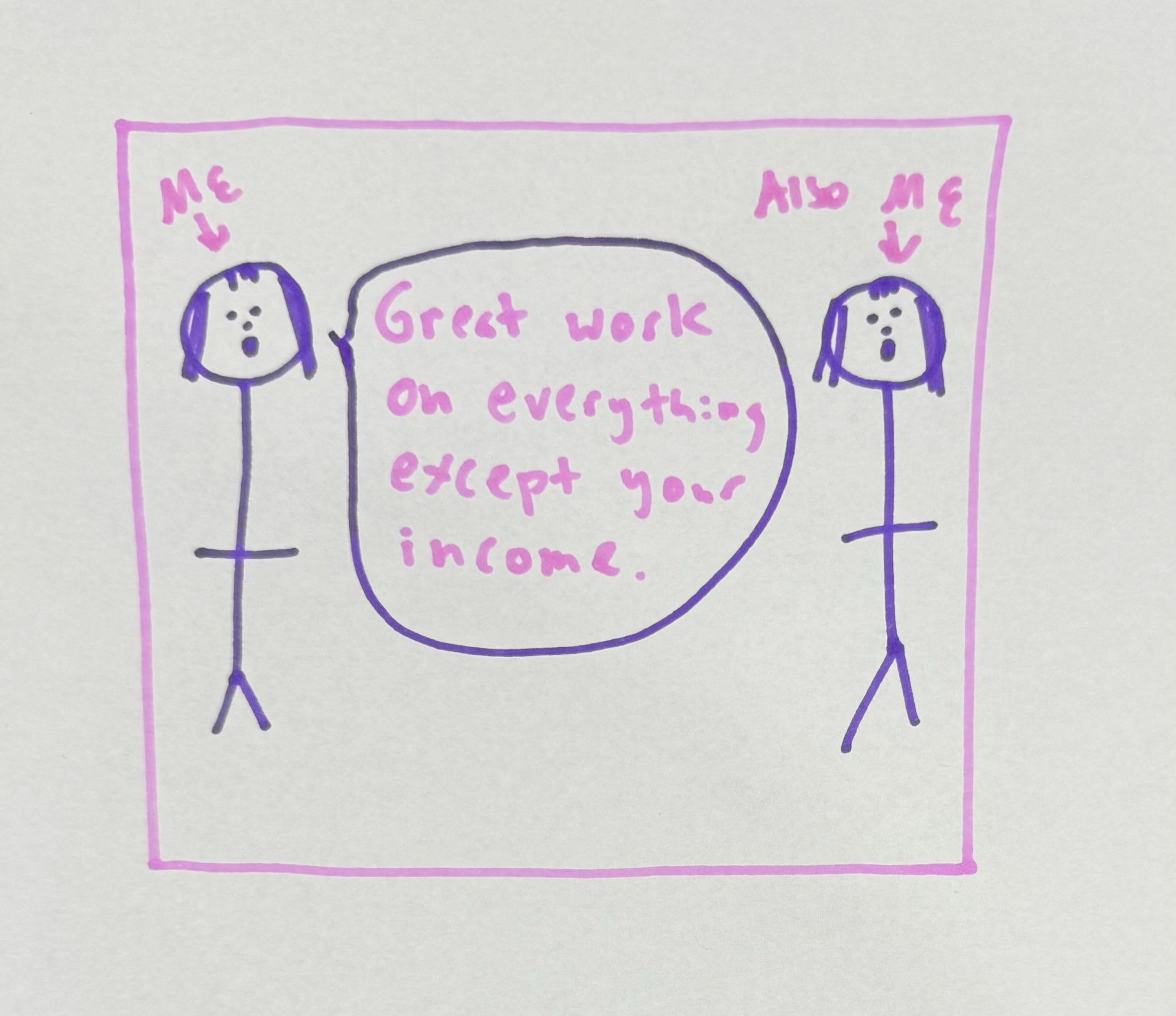
AM I A REAL ADULT IF I STILL FINANCIALLY DEPEND ON MY FAMILY?
—Allison Raskin in Emotional Support Lady
Last week, my husband went out of town for the first time since our son was born. For four (restless) nights, I slept in the house as the sole adult in charge of one baby and two dogs. I woke up each morning to cries, carefully administered my son’s medicine, fed the dogs and wrangled everyone for a poop-filled walk involving two leashes and a stroller before starting my workday. As I slowly shuffled down the sidewalk, I took stock of the life I have built for myself. I felt empowered and proud. Then a familiar doubt crept in.
Could I really claim these hallmarks of adulthood if the only thing making them possible is my father’s generosity? As I’ve shared before, my father pays for our childcare and owns our home where we live rent-free. This arrangement is what allowed us to afford having a child in Los Angeles on my income. If I didn’t have my dad’s help, our lives would be very different, and knowing this has made it hard for me to feel like a “proper adult.”
I’m realizing that deep in my soul, I have bought into the idea that financial independence is the cornerstone of adulthood. This icky part of me believes that everything else I do—writing books, coaching couples, parenting—doesn’t “count” as much as making a lot of money and not having to ask my family for help. I do not want to believe this. It goes against all my values and the reality of living in a capitalist society where making six figures in a major city doesn’t go very far. But the feeling of inferiority remains.
If this were simply a debate of logic, rather than emotion, it would be easy for me to stop placing a disproportionate amount of importance on my salary when judging my capability as an adult. There is simply too much evidence against the argument that income has anything to do with your maturity or intelligence. Think about all the brilliant people you know who are underpaid and all the total bozos that take in over a million dollars a year because they were born into the right family. The system is rigged. Boomers are not more wealthy than millennials because they are better at being adults. If anything, their lucky timing has allowed them to dodge the emotional development that financial instability has demanded of younger generations.
Sharing generational wealth isn’t even a modern phenomenon. For centuries, parents have been helping set their kids up for success with advantages like noble titles, trust funds and multi-generational housing. What is the point of amassing wealth in the first place if not to improve the life of your family? If I were in my father’s position, I would be doing the exact same thing for my child.
I know all of this and yet I still feel like I am playing dress-up.

ATHLETICS & ART

TECH
Shall we consider this a bullet dodged?
Phia, Phoebe Gates’s fashion-tech startup, has recently found itself in hot water after Bloomberg reported that the company was allegedly claiming sales it wasn’t responsible for. Sneha Rampalli, who thought about working there, looks at what’s going on.
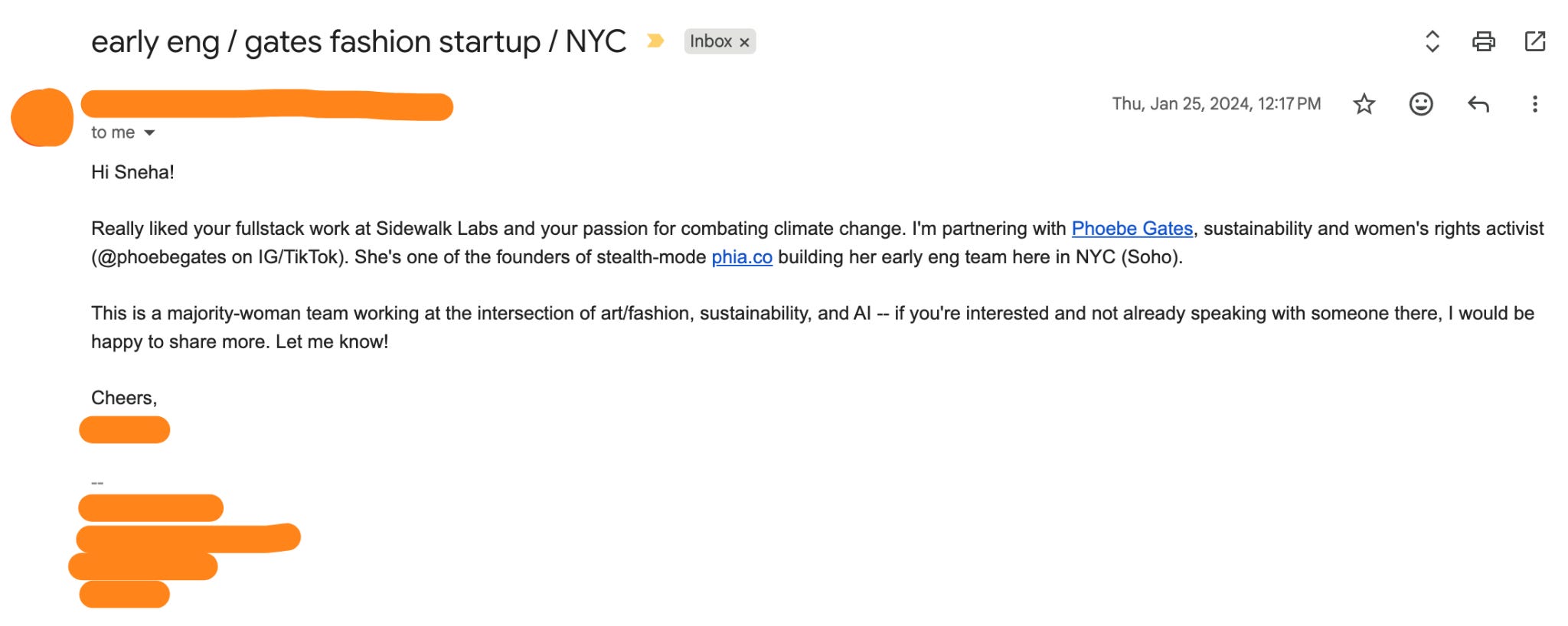
I almost worked at Phia
—Sneha Rampalli in Money Whispers
Phia is the shopping startup co-founded by Phoebe Gates and Sophia Kianni. They called it the Google flights for fashion, a personal shopping assistant for the young woman who is hustling. Phoebe says, “she shops like a genius, but doesn’t want to waste her time doing it.”
But Ben Edelman, an independent researcher who has spent decades digging into deceptive practices in digital advertising, uncovered wild findings. Phia works as a browser extension, and it engaged in a practice called cookie stuffing.
When a user reaches the purchase phase, even if they had arrived at the retailer through their own search or through a completely different affiliate link, Phia’s extension would silently open a background tab, inject its own referral code, and then take credit for the sale.
Translate: Phia was claiming commissions on purchases it didn’t earn, taking credit for sales that other publishers drove.
This is a fundamental violation of rules in affiliate marketing. You are only paid commission if a user really clicks, that too for your own link, but Phia’s code was generating fake clicks.
Bloomberg tested this across more than 50 sites.
During one test, Bloomberg found that clicking on a link to Nordstrom from a Wirecutter article, “The Best 4th of July Deals Still Live,” triggered a background tab that replaced the Wirecutter affiliate link with Phia’s. The same behavior was observed when Bloomberg clicked on a Google ad from a different publisher’s website.
But when Phia released their statement, they just called it a “bug.”
“Within the last 24 hours, we were made aware that in a recent release our codebase was causing misattributions from a subset of users,” the spokesperson said. “As soon as we were notified, our team worked overnight to identify, mitigate, and has since resolved the issue.”
While this is a serious financial crime, Phia is not the inventor of cookie stuffing.
I understand this space pretty well. Before Google and Money Whispers, I co-founded a social impact startup built on affiliate revenue. Early on, I realized the business model was very hard to accomplish. There were minimal returns per purchase, and it required massive volume. So when I saw that Honey was not only surviving but thriving, I was intrigued. Turns out four years later it is the subject of an ongoing class-action lawsuit for nearly identical practices. And one of Phia’s advisors was Honey’s president.
I want to be careful here because I don’t know exactly what was known, when, and by whom, but I do believe the connection matters, because cookie stuffing isn’t some obscure technical glitch. It’s a known practice with a history of legal consequences.
BEAUTY


TRAVEL
Is wonder a finite resource?
Anne Byrn returns to Paris, searching for the same sense of magic she felt over 40 years ago while attending cooking school.

Preserving Fruit in a French Style - No. 400
—Anne Byrn in Between the Layers
WHY DO FRUIT PRESERVES taste better in Paris?
And is it possible to go back someplace that once meant something to you and experience that same wonder again?
These were two questions swirling around in my head in late May when I returned to Paris four decades after being a cooking school student there.
In the early ’80s, sensing the need for a more solid culinary foundation, I took a leave of absence from the Atlanta Journal-Constitution and enrolled at La Varenne Ecole de Cuisine, at 34 Rue St. Dominique in Paris’s stately seventh arrondissement.
La Varenne had been founded in 1975 by British-American food writer and cooking teacher Anne Willan and was named in honor of Francois Pierre de la Varenne, the 17th-century author of the founding text of modern French cooking. Classes were taught by French chefs and translated simultaneously into English. I did not know it at the time, but La Varenne graduates would become the editors of food magazines, heads of food and beverage programs, famous chefs and cookbook authors, as well as leading caterers and cooking school teachers.
Julia Child was well connected to La Varenne and would appear out of nowhere at a lunch or Sunday brunch in someone’s nearby apartment. It was truly a pinch-me-to-make-sure-this-is-real kind of experience.
The way I finagled leaving a full-time job and hopping on a plane to Paris was to agree to write weekly for the newspaper while I was gone. This was before email or fax, so I wrote my columns longhand and put them in the mail.
Which might sound like an Eleanor Roosevelt way to live out Emily in Paris, but if it allowed me to be away and learn and grow, so be it. A small hiccup was that Delta Airlines lost my bags for a week. Other than that inconvenience, I lived in an apartment on Quai Voltaire along the Seine River, walked to class each morning like a Parisian, and traveled a bit around Europe after classes concluded.
Back then, I soaked in the small things I still love most about Paris—the morning greetings even when you don’t feel like talking—“bonjour madame” (you do feel better after you say it).
I remember fresh flowers on every corner and how people carried bouquets of flowers to give to other people. I remember thinking that the French dressed with such style and I needed to ditch the American white tennis shoes.
I skinned an eel, made my own croissants, perfected béarnaise, and tasted goat cheese for the first time. I took a weekend train trip to the Champagne region. I was in the same room with Julia Child and her co-author Simone (Simca) Beck. I bought my most favorite copper pans at the legendary cookware shop called E. Dehillerin.
COMICS

BOOKS
What does it take to sell a book nowadays?
As readership fluctuates and social media platforms morph into new beasts, authors are trying to understand how to properly move the needle.
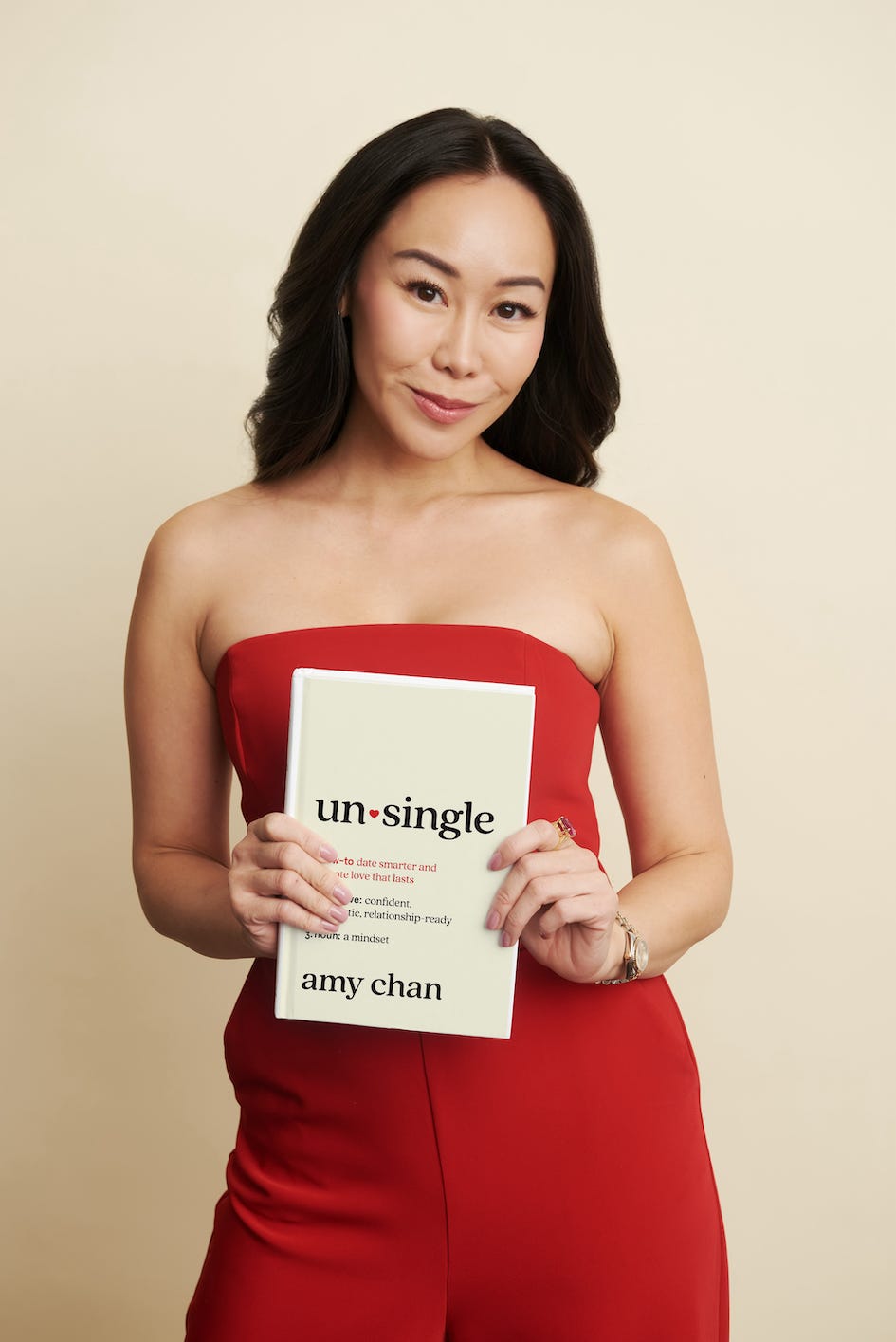
I Spent $44,000 Launching My Book. Three of Those Dollars Worked.
—Amy Chan in Renew with Amy Chan
Today I got the conversion report from the $10,000 TikTok influencer campaign I ran for the launch of UNSINGLE. Guess how many books it sold?
Three book sales.
Not three thousand. Three. That’s $3,333 per book, which makes each copy roughly the price of a used 2006 Honda Civic, except the Civic would have been more useful.
I’m sharing the full breakdown of what I spent, what converted, and what I’d do differently, because I spent a big chunk of my advance trying to give my second book momentum, and most of that money evaporated. If you’re launching a book, learn from my receipts instead of generating your own.
What Not to Do
1. The $10,000 TikTok influencer campaign
The pitch is seductive: creators with engaged audiences talk about your book, the algorithm does the rest. Here’s the thing. The content was good. This was the best video from my campaign, and I mean it when I say it’s genuinely well made: watch it here.
It just doesn’t convert. Views are not sales. People watch a 40-second video about your book the same way they watch a video about a raccoon eating grapes: entertained, moved even, and then they keep scrolling.
2. The $10,000 consulting / speaking gig agency
I paid another agency $10,000 to book speaking engagements in exchange for bulk book buys. They booked zero. Not “fewer than promised.” Zero. When I asked for a refund, they said they put in effort and that I was never guaranteed results. Um, what? After a lot of haggling, they finally refunded a portion of my fee.
3. The $24,000 PR retainer
I hired a PR agency for four months. To their credit, they landed me an hour segment on Tamron Hall, which was big. I got a big spike on Amazon the day it aired and it probably netted about 200 book sales. The Tamron Hall social team posted a few collaboration posts on their IG page, which got hundreds of thousands of views collectively (example of one here). While I can’t measure how many of those translated to sales, it was good reach and credibility.

FELINES
Substackers featured in this edition
Art & Photography: James O'Boyle, Sam Shopp, Mateo Michoux, Grant Snider, Rebecca Deczynski
Video & Audio: caro claire burke, Katie Gatti Tassin
Writing: Blackbird Spyplane, Allison Raskin, Sneha Rampalli, Anne Byrn, Amy Chan

Recently launched

The editors at Audible have launched Speak Easy, where they’ll be posting a biweekly podcast, listening recommendations, and short- and long-form essays.
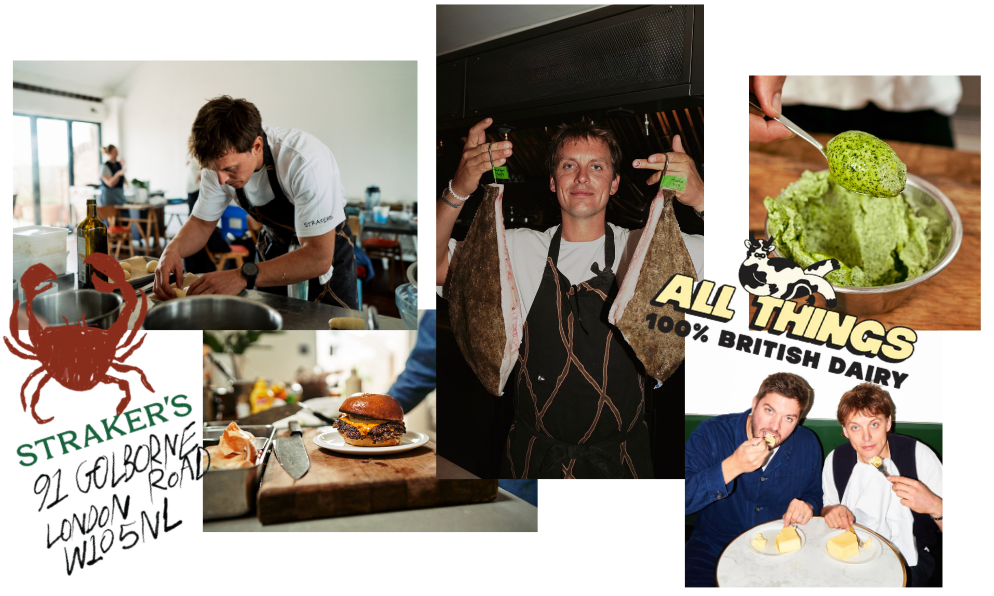
Chef and London restaurateur Thomas Straker is now on Substack. He’ll be sharing the dishes he’s cooking at home, the restaurants he’s excited about, the ingredients he’s obsessed with, and the lessons he’s learned from years spent in professional kitchens.
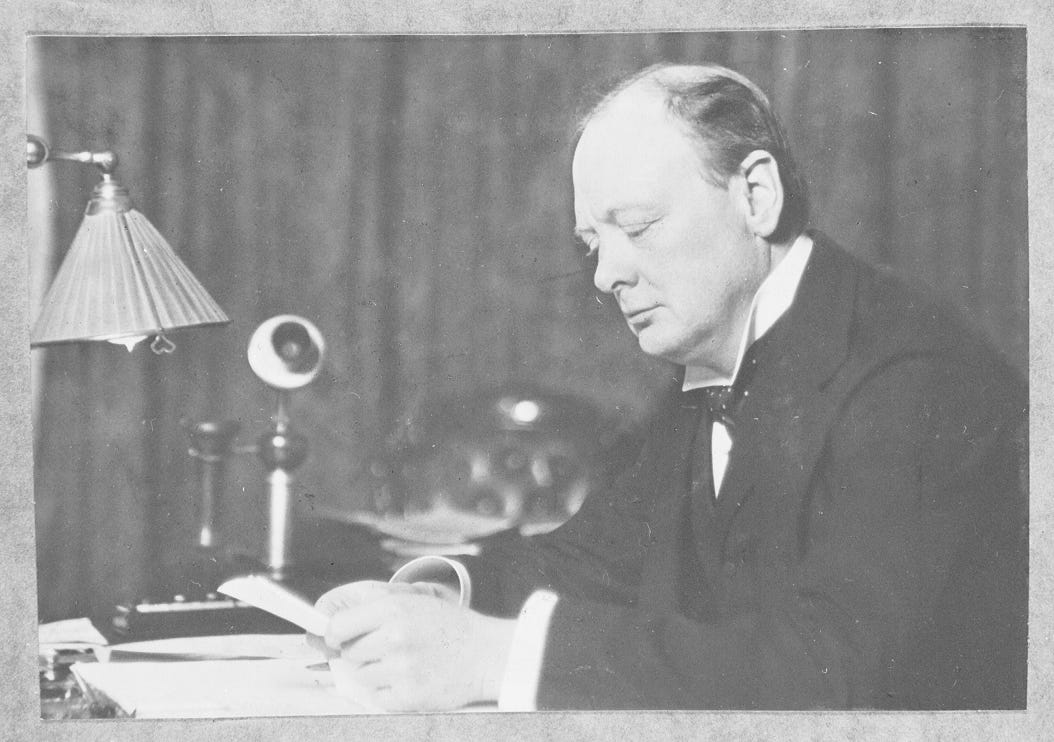
Winston Churchill’s official literary estate will offer “unique access to Churchill’s prolific literary output” and “his vast collection of personal papers” on Substack.
Jordon Cox, aka The Coupon King, is on Substack with “deals, freebies, codes and tricks” for his readers.

Dr. Shefali, a clinical psychologist, has launched Raising Conscious Children, which will include “frameworks you can use with your family” along with reflections on raising children in the modern world.
Journalist and speaker Danae Mercer is now “exploring confidence, motherhood, beauty, ambition, and the stories that shape us” on Substack.
Demis Hassabis, a Nobel laureate and co-founder of Google DeepMind, has joined Substack and will be “trying to understand the fundamental nature of reality.”

Inspired by the writers and creators featured in the Weekender? Starting your own Substack is just a few clicks away:

The Weekender is a weekly roundup of writing, ideas, art, audio, and video from the world of Substack. Posts are recommended by staff and readers, and curated and edited by Danya Issawi out of Substack’s New York office.
Regarding the "Hallmarks of Adulthood" piece. Living partially off one's parents doesn't mean you're not an adult. It means you're a privileged one.
I see that there seems to be a persistent myth that somehow “boomers” had it easy. Perhaps some did, especially those whose parents were financially successful. But in general, they had it no easier than you. Picture this: you are 19 years old, minding your own business and one day you receive a notice that you are required to report for induction into the Army to fight a war in a jungle on the other side of the planet. Happened to me. Upon return to civilization you find gas prices have skyrocketed if you can get it at all. (There are long lines at gas stations.). Inflation is raging. For years. Want to buy a home? Mortgage rates are 14%. Need a car? Good luck. The term “sticker shock” was invented in the 70’s. My parents were blue collar workers and not in any position to help me much. And yet, I had it easier than they did. They were raised during the depression and my dad and all my uncles fought in WWII. Some in Europe and some in the Pacific. Even though they couldn’t directly help me financially I benefited from the lives they lived. In short, you are blessed beyond all measure. Economically, you are in the top 1% in the world. You are benefitting from all those people who built America for the last 250 years. Be thankful! Nobody is independent of those that came before. I hope you are able to help your children in their adulthood. It’s a good thing. But you are already helping them with the love and care you give. You are doing great! Keep it up!